
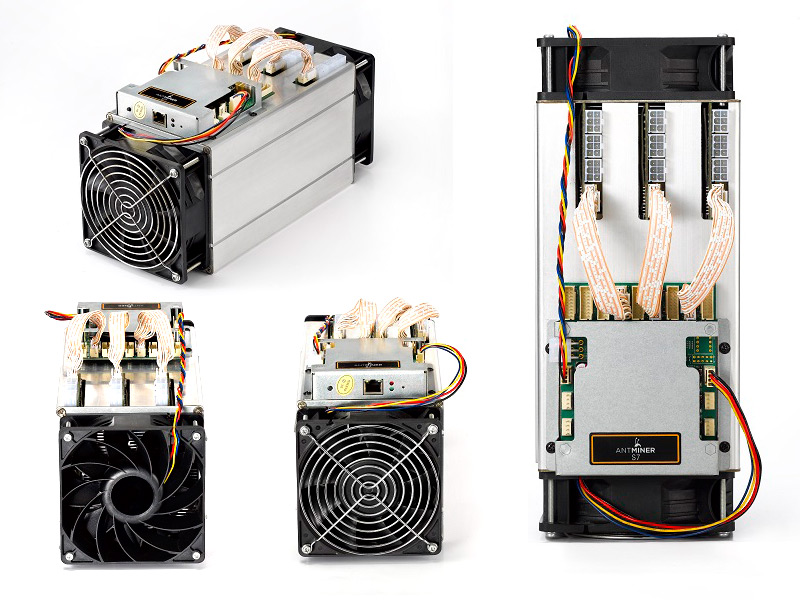
This post examines the Bitmain Antminer S7, released in 2015, assessing its historical significance, technical specifications, and current viability in the cryptocurrency mining landscape, particularly focusing on its profitability in light of modern technological advancements and economic factors.
The cryptocurrency mining industry has seen rapid evolution, marked by significant advancements in hardware technology. Among the pivotal devices in this evolution is the Bitmain Antminer S7. Released in September 2015, it represented a notable step forward in mining hardware efficiency. However, given the current state of technology and economics, the S7’s suitability for contemporary mining operations is questionable. This essay will explore the historical context, technical attributes, and economic implications of using the Antminer S7 today, ultimately arguing that its utility is limited to specific, niche scenarios.
Historical Context and Technological Specifications
The Antminer S7 emerged during a period of growing interest in Bitcoin mining. It utilized 28nm chips (BM1385), integrating approximately 135–162 of these chips to achieve a hashrate of roughly 4. 7 to 4. 86 TH/s. At the time, this was a competitive figure, making the S7 a popular choice among miners seeking a balance between performance and cost. Its power consumption ranged from 1210 to 1300W, resulting in an efficiency of about 0. 25 J/GH (or 250 J/TH).
The release of the Antminer S7 coincided with a phase of increased accessibility in Bitcoin mining. Prior to its release, mining was largely dominated by custom-built rigs or earlier generation ASICs with lower efficiency. The S7 offered a more standardized and efficient solution, contributing to the decentralization of mining operations by allowing smaller-scale miners to participate.
Bitmain, the manufacturer, played a crucial role in shaping the mining hardware market. Jihan Wu, a co-founder of Bitmain, significantly influenced the direction of Bitcoin mining technology. His company’s ability to mass-produce ASICs at competitive prices democratized access to mining, although it also led to concerns about centralization within the mining ecosystem.
Economic Considerations and Current Profitability
Today, the economic landscape for Bitcoin mining has changed dramatically. The introduction of more advanced ASICs has rendered the Antminer S7 largely obsolete in most contexts. The primary issue is its energy inefficiency. Modern ASICs offer significantly higher hashrates at lower power consumption levels. For instance, newer models can achieve efficiencies of less than 30 J/TH, a substantial improvement over the S7’s 250 J/TH.
Electricity costs are a critical factor in determining the profitability of mining operations. With typical electricity rates ranging from $0. 10 to $0. 15 per kWh in many regions, the S7 would likely incur a net loss daily. This is due to its high power consumption relative to its low hashrate. Profitability calculators consistently show that the cost of electricity to run an S7 exceeds the potential revenue generated from mining, making it an economically unviable option for most miners.
However, specific scenarios exist where the S7 might still be considered. In regions with extremely low electricity costs, such as those with subsidized energy or access to renewable sources like hydroelectric power, the economics could potentially shift in favor of the S7. Additionally, individuals with access to free or very cheap electricity, such as those utilizing excess capacity from solar panels, might find some marginal utility in operating the S7.
Despite these niche cases, the broader trend indicates a decline in the S7’s relevance. As the Bitcoin network’s difficulty increases, older, less efficient machines struggle to compete. Difficulty adjustments, which occur roughly every two weeks, ensure that the block creation rate remains constant. As more efficient miners join the network, the difficulty rises, making it harder for older machines like the S7 to solve the complex mathematical problems required to mine Bitcoin.
Practical Considerations for Operation
If one were to acquire and operate an Antminer S7 today, several practical considerations would be paramount. First, a robust power supply capable of delivering the required wattage, with additional overhead for stability, is essential. Voltage stability is critical to prevent damage to the ASIC chips and ensure consistent performance.
Cooling is another significant concern. The Antminer S7 generates considerable heat, and while it includes two built-in fans, these may not suffice in warmer climates or poorly ventilated environments. Ambient temperature and airflow must be carefully managed to prevent overheating, which can lead to decreased performance or hardware failure. In some cases, additional cooling solutions, such as ventilation systems or even air conditioning, may be necessary.
Connecting the S7 to the Bitcoin network requires an Ethernet connection and the use of appropriate SHA-256 mining software and pools. Miners must carefully select mining pools that offer favorable fee structures and reliable payouts. Furthermore, it is crucial to continuously monitor electricity prices and network difficulty to assess the ongoing profitability of the operation.
Challenges and Limitations
Operating an older miner like the Antminer S7 presents several challenges. Wear and tear are significant concerns, as older units are more prone to failure. Fans may become noisy or fail, requiring replacement. Maintenance costs can also be higher due to the age of the hardware.
The noise generated by the S7 can be disruptive, particularly in residential settings. The cooling fans operate at high speeds, producing a significant amount of noise. This can be a major drawback for home miners or those operating in shared spaces.
The fluctuating price of Bitcoin adds another layer of complexity. While Bitcoin’s price has generally trended upward over the long term, short-term volatility can significantly impact mining profitability. A sudden price drop can quickly turn a marginally profitable operation into a losing one.
Alternative Perspectives
While the Antminer S7 is generally considered obsolete for profitable mining, some argue that it can still serve educational or experimental purposes. For individuals interested in learning about Bitcoin mining hardware and software, the S7 offers a relatively inexpensive entry point. It allows users to gain hands-on experience with setting up and configuring mining equipment without investing in more expensive, cutting-edge technology.
Additionally, the S7 can be used for testing and development purposes. Developers working on new mining software or firmware can use the S7 as a testbed for their code. Its simplicity and well-documented architecture make it a suitable platform for experimentation.
However, it is important to acknowledge that these alternative uses are limited and do not justify the S7 as a viable option for profit-seeking mining operations.
The Bitmain Antminer S7, while historically significant, is no longer a practical choice for most Bitcoin miners. Its high energy consumption, low hashrate, and the availability of more efficient alternatives render it economically unviable in the vast majority of scenarios. Only in very specific circumstances, such as access to extremely cheap electricity or use in educational settings, might the S7 still hold some limited value. As technology continues to advance and the Bitcoin network evolves, the Antminer S7 serves as a reminder of the rapid pace of innovation in the cryptocurrency mining industry and the importance of adapting to new technological and economic realities. The contributions of figures like Jihan Wu have shaped this landscape, leading to continuous improvements in mining hardware efficiency and accessibility, albeit with ongoing challenges related to centralization and energy consumption.
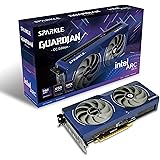
Sparkle Intel Arc B570 Guardian OC Graphics Card, 10GB GDDR6, Torn Cooling 2.0, Axial Fan, Breathing Light, Metal Backplate, SB570G-10GOC
$227.88 (as of 11/03/2026 13:57 GMT +03:00 - More infoProduct prices and availability are accurate as of the date/time indicated and are subject to change. Any price and availability information displayed on [relevant Amazon Site(s), as applicable] at the time of purchase will apply to the purchase of this product.)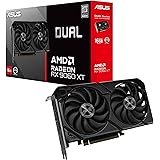
ASUS Dual Radeon™ RX 9060 XT 16GB GDDR6 Graphics Card (PCIe 5.0, HDMI 2.1b, DisplayPort 2.1a, 2.5-Slot Design, Axial-tech Fan Design, 0dB Technology, and More)
$489.99 (as of 11/03/2026 13:57 GMT +03:00 - More infoProduct prices and availability are accurate as of the date/time indicated and are subject to change. Any price and availability information displayed on [relevant Amazon Site(s), as applicable] at the time of purchase will apply to the purchase of this product.)
ASUS Prime Radeon™ RX 9070 XT OC Edition Graphics Card, AMD (PCIe 5.0, HDMI/DP 2.1, 2.5-Slot Design, Axial-tech Fans, Ball Bearings, Dual BIOS, GPU Guard)
$799.99 (as of 11/03/2026 13:57 GMT +03:00 - More infoProduct prices and availability are accurate as of the date/time indicated and are subject to change. Any price and availability information displayed on [relevant Amazon Site(s), as applicable] at the time of purchase will apply to the purchase of this product.)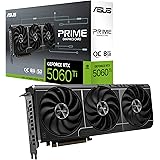
ASUS The SFF-Ready Prime GeForce RTX™ 5060 Ti 8GB GDDR7 OC Edition Graphics Card (PCIe® 5.0, 8GB GDDR7, HDMI®/DP 2.1, 2.5-Slot, Axial-tech Fans, Dual BIOS)
$415.99 (as of 11/03/2026 13:57 GMT +03:00 - More infoProduct prices and availability are accurate as of the date/time indicated and are subject to change. Any price and availability information displayed on [relevant Amazon Site(s), as applicable] at the time of purchase will apply to the purchase of this product.)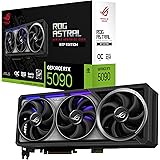
ASUS ROG Astral GeForce RTX 5090 BTF OC Edition, 32GB GDDR7, 3.8-Slot, 1000W Support
$4,191.55 (as of 11/03/2026 13:57 GMT +03:00 - More infoProduct prices and availability are accurate as of the date/time indicated and are subject to change. Any price and availability information displayed on [relevant Amazon Site(s), as applicable] at the time of purchase will apply to the purchase of this product.)