


The landscape of cryptocurrency mining is perpetually reshaped by technological advancements aimed at increasing computational efficiency and managing the immense thermal load produced by application-specific integrated circuits, or ASICs. Among the latest contenders in this highly competitive field is the Auradine Teraflux AH3880. This machine represents a significant evolution, particularly through its reliance on advanced hydro-cooling techniques, positioning it as a formidable tool for large-scale Bitcoin mining operations focused on both raw performance and operational sustainability
The most immediate measure of any ASIC miner’s capability is its hashrate, and the Teraflux AH3880 delivers strongly in this regard, achieving a rated output of 600 Terahashes per second (TH/s) for the SHA-256 algorithm, which underpins Bitcoin mining. This high ceiling is crucial for maintaining competitiveness as network difficulty constantly increases. However, raw speed must be weighed against power consumption and efficiency, often measured in Joules per Terahash (J/TH). The AH3880 offers operational flexibility through its selectable modes. In its most efficient configuration, termed “Eco mode,” it yields approximately 400 TH/s at an efficiency of around 14. 8 J/TH. While the top-tier “Turbo mode” pushes performance to the full 600 TH/s, this comes at the cost of efficiency, rising to about 17. 9 J/TH. Auradine itself cites a general efficiency figure of 14. 5 J/TH, suggesting that when managed appropriately, the machine can maintain a strong performance-to-energy ratio, especially when benchmarked against older or less optimized air-cooled counterparts.
The primary distinguishing feature of the AH3880 is its comprehensive hydro-cooling system. Unlike conventional miners that rely on powerful, loud fans, this unit utilizes a closed-loop water-cooling mechanism. This transition from air to liquid cooling is not merely a minor design tweak; it fundamentally alters the operating environment of the miner. Total power consumption can approach 8,700 Watts under standard operations, according to some external reports, though the manufacturer’s datasheet suggests peaks near 10,000 W under certain high-stress conditions. Managing this heat output efficiently is paramount, and the liquid system, requiring a flow rate between 5 and 20 litres per minute of coolant maintained between 10°C and 60°C, excels at rapid heat dissipation.
This cooling methodology yields two significant operational advantages: noise reduction and form factor optimization. The reported noise level of approximately 35 decibels (dB) is exceptionally low for a machine producing this much computational power. This quiet operation opens up deployment possibilities in locations previously unsuitable for high-density, noisy mining hardware, such as industrial parks closer to urban centres or within facilities shared with less noise-tolerant activities. Furthermore, the 2U server-like design allows for a compact footprint, a considerable benefit in co-location centres where maximizing density per square meter is a key economic driver.
The strategic positioning of the Teraflux AH3880 is further solidified by its engineering origin and power requirements. Being engineered in the United States, as reported by industry analysts, may offer assurances regarding supply chain stability and insulation from certain geopolitical trade barriers that often impact hardware sourcing from other regions. Operationally, it requires a three-phase power input, specified between 380V and 480V, typical for high-capacity industrial equipment.
When assessing real-world profitability, factors such as prevailing electricity costs and network difficulty become highly variable. However, modelling the 600 TH/s output using current market assumptions suggests a daily revenue stream in the range of ten to fourteen US dollars per day, before accounting for the substantial cost of electricity itself. The actual net profitability is therefore highly sensitive to the efficiency achieved in practice; a miner operating consistently near the 17. 9 J/TH mark will be significantly less profitable than one consistently achieving closer to the 14. 8 J/TH Eco mode rating.
The Auradine Teraflux AH3880 is a sophisticated entry into the high-performance mining sector. Its strategic advantages lie in its impressive 600 TH/s capacity, coupled with the superior thermal management provided by its hydro-cooling system. This cooling solution not only enables high performance but simultaneously delivers the critical benefits of exceptionally low noise and a compact design. While the high-power draw necessitates robust electrical infrastructure and careful mode selection to maximize efficiency, the AH3880 offers a compelling, technologically advanced option for mining operations prioritizing density, quiet operation, and competitive raw hashing power.
Is the Auradine Teraflux AH3880 a Good Miner?
The Auradine Teraflux AH3880 is a good choice for serious miners, but whether it is used in the United States or around the world, it is important to carefully consider several key things that go beyond just how fast it can do calculations. The AH3880’s advanced specifications must match the local infrastructure, energy costs, and how it will be used. Otherwise, it will not work.
The cost of electricity is the most immediate and important factor in determining whether the AH3880 should be used. Under normal conditions, the machine draws a lot of power that at least 8,700 watts. Although its efficiency rating of 14. 5 Joules per Terahash is good for its class, this level of energy use requires a very low operational cost per kilowatt-hour to be profitable. In places like the US, where electricity rates can vary significantly from one state or utility provider to another, getting long-term, low-cost power contracts is a must. A small difference in local utility rates can be the difference between a profitable mining operation and one that struggles to cover operating expenses, no matter what the price of Bitcoin or the difficulty of the network is. The miner’s smart power management features, like Energy Tune and support for demand-response programs through Qualified Scheduling Entities (QSE), help to mitigate this. These tools allow operators to dynamically change the power consumption based on grid pricing, which makes facilities in places with time-of-use metering especially useful.
The cooling system is the second biggest obstacle for infrastructure. Unlike air-cooled miners, the Teraflux AH3880 is hydro-cooled and needs a complicated liquid cooling system with pumps, radiators, and specialised tubing. This means that it has to be used in places where there is already or can be liquid cooling infrastructure, which is usually in modern data centres. While water cooling has a lot of benefits, such as better thermal efficiency, the ability to put miners closer together, and very low noise (about 35 decibels), it makes things more complicated and costs more money to build the cooling plant. For global deployment, this means that you have to check the local availability and reliability of industrial water-cooling parts and maintenance knowledge in addition to the electrical grid. This is because the cooling plant itself adds complexity and cost. This is different from the simpler plug-and-play nature of air-cooled miners. This requirement means that the deployment has to target places that already have or can support liquid cooling infrastructure, which is usually in modern data centres. This is because the cooling plant itself adds complexity and cost.
The AH3880’s physical layout helps to guide implementation strategy. Its 2U server form factor is particularly designed for use in data centres with a high density. This design makes it easier to mount it on a rack and manage cables, which is very important when you are managing hundreds or thousands of units. For an operator who is growing their business, this is a good thing because it means that the physical layout will be the same every time. However, this feature makes the AH3880 not very useful in smaller, makeshift mining sheds, which are common in some parts of the world where simple air cooling is the norm. This is because the AH3880 is designed for use in professional, industrial-grade colocation facilities. This design pushes adoption toward professional, industrial-grade colocation facilities.
athe return on investment (ROI) and capital expenditure (CapEx) have to be carefully determined. As a cutting-edge, industrial-grade miner, the AH3880 is expected to be expensive at first. The profitability calculation must take into account the depreciation of this high starting investment in light of the changing factors in the cryptocurrency market: the price of Bitcoin, the ever-rising network difficulty, and the operational expenses noted above. The high hashrate of 600 TH/s is competitive, but this advantage has to be big enough to make up for the initial cost and the cost of the specialized infrastructure within a reasonable amount of time.
It is clearly a strong and technically advanced tool with great hashrates and efficiency provided by dynamic voltage and frequency scaling (DVFS) and solid remote control via Flux Vision. Its strengths are in data-centre-optimized cooling and density. However, whether it’s a “good miner” for a particular deployment depends totally on circumstances. Success in the US or around the world requires extremely low, steady power rates, the present or planned capacity for liquid cooling infrastructure, and the financial resources to absorb the high initial investment cost. The AH3880 is geared toward the sophisticated, big-scale industrial miner, so infrastructure alignment is the most important thing for a successful deployment.
Important Obstacles the Auradine Teraflux AH3880 Miner Faces
Driven by the unrelenting quest of more hashing power and energy efficiency, the landscape of cryptocurrency mining is ever changing. Within this competitive environment, specialized gear like the Auradine Teraflux AH3880 claims great hashing of Bitcoin performance. The very features that provide this miner its theoretical strength also provide a challenging set of practical and financial problems that would-be operators have to carefully negotiate. While the AH3880 has strong computational capabilities, its high operational demands, considerable capital expenditure, and infrastructure requirements make it a very specialized, not generally available, mining solution.
The AH3880’s great power consumption is one of the most immediate and challenging challenges it poses. Drawing around 8,700 watts, this is a very big energy footprint for a single mining machine. In an industry where profitability is often determined by razor thin margins, such high energy demand translates directly into massive operational expenditure. This creates extreme electricity cost sensitivity. For miners working where kilowatt-hour rates are even somewhat high, the return on investment (ROI) timeline stretches considerably, maybe making the whole project financially unprofitable or even negative. Profitability estimators often highlight this point, showing that the viability of the AH3880 almost totally depends on getting exceptionally cheap or subsidized electricity, perhaps through special demand-response agreements or hosting in areas with lots of low-cost power generation.
Unlike conventional air-cooled Application-Specific Integrated Circuits (ASICs), which can be deployed with little modification to current server rooms, the AH3880 requires a dedicated liquid-cooling infrastructure, therefore moving the deployment far beyond a simple plug-and-play scenario. Successful operation demands the integration of specific components, including industrial-grade pumps, large-capacity radiators, and extensive piping networks capable of safely handling the thermal load. Establishing this liquid-cooling capability introduces significant complexity and added capital cost well beyond the purchase price of the miner itself. For smaller operations or those accustomed to simpler air-cooled setups, this mandatory infrastructure upgrade represents a substantial technical barrier to entry.
The AH3880 also presents a major financial deterrent. The initial investment is rather high as reported capital expenses per unit are around US$ 5,999. This high unit cost, together with the necessary expenditure for the needed liquid-cooling infrastructure and installation knowledge, quickly raises the total deployment cost. Effective amortizing of such a high fixed capital cost requires miners to run the units continuously and maximize uptime. This financial reality favours big-scale activities or professional hosting companies where volume enables better absorption of fixed expenses and economies of scale in infrastructure management. Given the volatile nature of cryptocurrency markets, a small-scale or individual miner might find the capital risk too high.
Moreover, the relative novelty of Auradine in the established ASIC manufacturing sector raises supply chain and support risks. Established players in the mining hardware sector have years of proven reliability, wide-ranging distribution networks, and solid secondary markets. As a newcomer, Auradine may have more volatility regarding long-term support, software updates, availability of spare parts, and hardware resale value. Reports from community forums sometimes highlight potential issues with bulk order fulfilment or support responsiveness, risks that mature buyers in capital-intensive industries prefer to avoid when dealing with essential production assets.
The Auradine Teraflux AH3880 is a technical apex in terms of raw hashing capability, but its usage is severely limited by its operational profile. The convergence of extremely high-power consumption, compulsory and complex liquid-cooling requirements, significant upfront capital expenditure, and the inherent supply chain uncertainties associated with a newer manufacturer creates a difficult proposition. The AH3880 is not intended for the typical enthusiast or the operator depending on standard utility rates. Rather, it targets advanced, large-scale mining operations with the technical knowledge to handle difficult cooling systems and, most importantly, can secure electricity at rates so low that they essentially offset the machine’s enormous appetite for power, therefore turning possible issues into manageable operational features.
AH3880 Product Specifications
Crypto Algorithm SHA-256
Hashing Performance (TH/s at Joules/TH)
• Range: 0-600TH/s
• Eco: 14.3J/TH at 400TH/s
• Mid: 15.8J/TH at 500TH/s
• Turbo: 17.5J/TH at 600 TH/s
Cooling Mechanism: Hydro
Coolant per miner: Approximately 1L
Coolant Temperature Range: 10°C to 60°C
Coolant Flow Rate: ~5L/min to 20L/min
Power: 10000 Watts
Power Supply AC Input Voltage, Nominal, Min/Max: 380-480V, 320-528V
Power Supply AC Input Current: 20 Amps per phase
Power Supply AC Input Frequency: 48-62Hz
Power Cable: 1 x SA2-30 to SA2-30
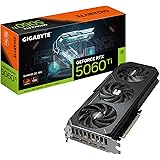
GIGABYTE GeForce RTX 5060 Ti Gaming OC 16G Graphics Card, by NVIDIA,16GB 128-bit GDDR7, PCIe 5.0, WINDFORCE Cooling System,DisplayPort & HDMI - Video Output Interface,GV-N506TGAMING OC-16GD Video Card
$549.99 (as of 11/03/2026 13:57 GMT +03:00 - More infoProduct prices and availability are accurate as of the date/time indicated and are subject to change. Any price and availability information displayed on [relevant Amazon Site(s), as applicable] at the time of purchase will apply to the purchase of this product.)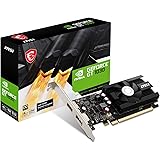
msi Gaming GeForce GT 1030 4GB DDR4 64-bit HDCP Support DirectX 12 DP/HDMI Single Fan OC Graphics Card (GT 1030 4GD4 LP OC)
$118.51 (as of 11/03/2026 13:57 GMT +03:00 - More infoProduct prices and availability are accurate as of the date/time indicated and are subject to change. Any price and availability information displayed on [relevant Amazon Site(s), as applicable] at the time of purchase will apply to the purchase of this product.)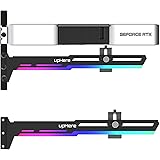
upHere 5V 3PIN Addressable RGB Graphics Card GPU Brace Support Video Card Sag Holder,Built-in 5V ARGB Strip,Adjustable Length and Height Support,G276ARGB
$15.99 (as of 11/03/2026 13:57 GMT +03:00 - More infoProduct prices and availability are accurate as of the date/time indicated and are subject to change. Any price and availability information displayed on [relevant Amazon Site(s), as applicable] at the time of purchase will apply to the purchase of this product.)
XFX Radeon RX 7900XT Gaming Graphics Card with 20GB GDDR6, AMD RDNA 3 RX-79TMBABF9
$699.99 (as of 11/03/2026 13:57 GMT +03:00 - More infoProduct prices and availability are accurate as of the date/time indicated and are subject to change. Any price and availability information displayed on [relevant Amazon Site(s), as applicable] at the time of purchase will apply to the purchase of this product.)
ASUS TUF GeForce RTX™ 5080 16GB GDDR7 OC Edition Graphics Card, NVIDIA, Desktop (PCIe® 5.0, HDMI®/DP 2.1, 3.6-Slot, Military-Grade Components, Protective PCB Coating, Axial-tech Fans, Vapor Chamber)
$1,644.99 (as of 11/03/2026 13:57 GMT +03:00 - More infoProduct prices and availability are accurate as of the date/time indicated and are subject to change. Any price and availability information displayed on [relevant Amazon Site(s), as applicable] at the time of purchase will apply to the purchase of this product.)