
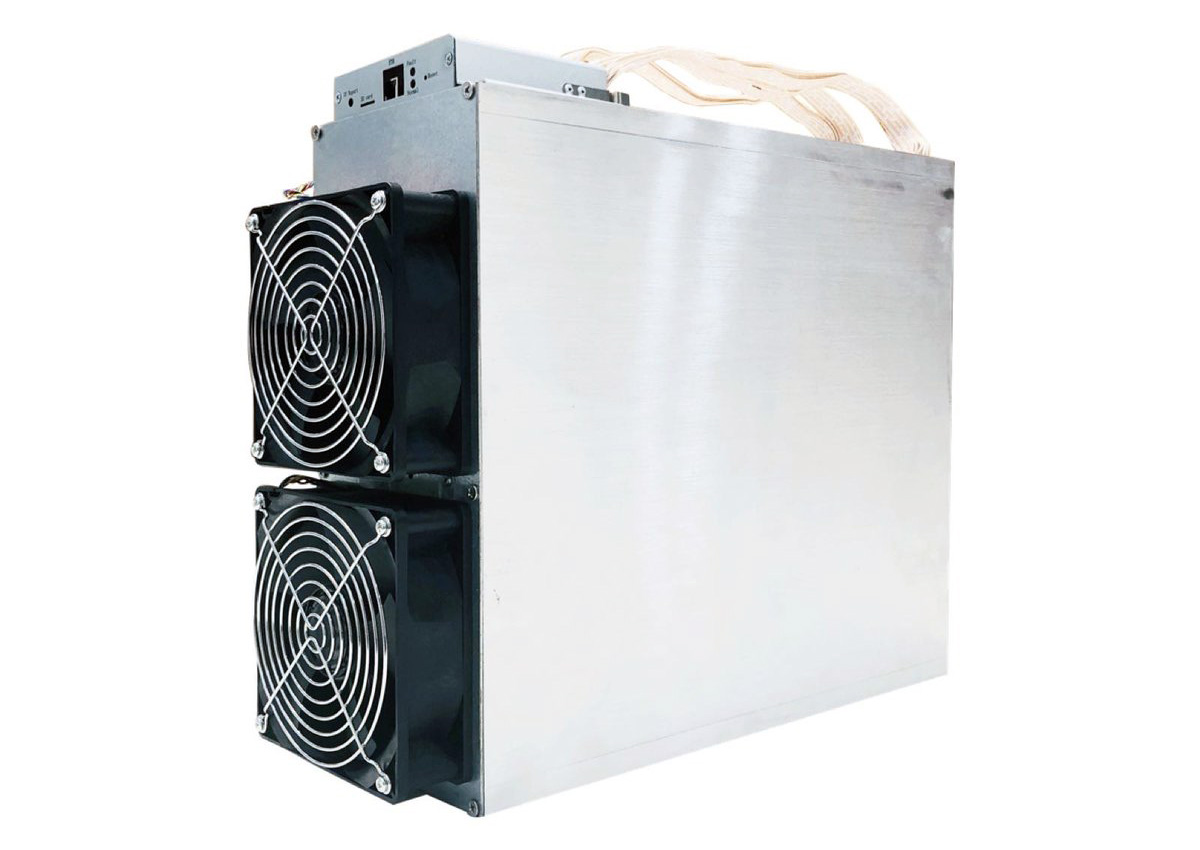
The Bitmain Antminer E3, released in 2018, marked a significant turning point in the world of cryptocurrency mining, specifically for Ethereum. This post explores the specifications, impact, and controversies surrounding the Antminer E3, including its hashing algorithm, hashrate, power consumption, and its position as the first Ethereum Application-Specific Integrated Circuit (ASIC) miner. We will also examine the reactions and debates that arose within the Ethereum community and the broader implications for the future of decentralized cryptocurrencies.
The Rise of ASICs and the Ethereum Mining Landscape
Prior to the introduction of ASICs like the Antminer E3, Ethereum mining was primarily dominated by Graphics Processing Units (GPUs). GPUs offered a versatile solution, capable of performing a wide range of computational tasks, including the Ethash algorithm used by Ethereum. This allowed for a relatively decentralized mining landscape, where individuals and small-scale mining farms could participate using readily available hardware. However, the increasing difficulty of mining Ethereum, driven by its rising popularity and the inherent design of its proof-of-work consensus mechanism, created an incentive for the development of more specialized and efficient hardware.
ASICs are designed for a single purpose. They offer significantly higher performance and energy efficiency compared to general-purpose hardware like GPUs when performing that specific task. In the context of cryptocurrency mining, this translates to a greater hashrate (the speed at which a miner can solve complex cryptographic puzzles) at a lower power consumption, leading to higher profitability. The development of ASICs for Ethereum was a natural progression, driven by the economic incentives of the mining market.
Antminer E3: Specifications and Performance
The Bitmain Antminer E3 was the first commercially available ASIC miner specifically designed for the Ethash algorithm, which is used by Ethereum and Ethereum Classic. Its specifications included a hashrate of 180 MH/s (Mega hashes per second) and a power consumption of 800 watts per hour. These figures represented a significant improvement over the performance of even high-end GPUs at the time. A top-tier GPU might achieve a hashrate of around 30 MH/s while consuming a similar amount of power.
The Antminer E3 offered a sixfold increase in hashrate for roughly the same power consumption. This translated to a dramatic increase in mining efficiency. It quickly became the most profitable option for Ethereum mining. Its introduction sent ripples through the Ethereum community. It sparked intense debate about the implications of ASIC dominance on the network’s decentralization.
Impact on the Ethereum Network
The arrival of the Antminer E3 had a swift and profound impact on the Ethereum network. The overall hashrate of the network increased sharply, indicating a concentration of mining power in the hands of those who could afford to purchase and operate these specialized machines. This raised concerns about the potential for centralization. A small number of entities controlling a significant portion of the network’s mining power could potentially exert undue influence over the blockchain. This could threaten its immutability and censorship resistance.
The increased difficulty of mining also meant that GPU miners, who had previously formed the backbone of the Ethereum network, found it increasingly difficult to compete. Many were forced to shut down their operations. This further contributed to the centralization of mining power and raised questions about the long-term viability of GPU mining on the Ethereum network.
Community Reactions and the Threat of an ASIC-Resistant Fork
The Ethereum community responded to the introduction of the Antminer E3 with a mix of concern and outrage. Many feared that ASIC dominance would undermine the network’s decentralization. It would make it more vulnerable to attacks and manipulation. A significant portion of the community advocated for an “ASIC-resistant” hard fork. This would modify the Ethash algorithm to render existing ASICs obsolete, leveling the playing field for GPU miners once again.
The debate over ASIC resistance became highly polarized. Proponents argued that it was necessary to preserve the decentralized nature of Ethereum. Opponents argued that it was a short-sighted solution that would ultimately harm the network by discouraging innovation and potentially leading to a cat-and-mouse game between developers and ASIC manufacturers. They also pointed out that ASIC resistance was difficult to achieve in practice. There was always a risk that new ASICs would be developed that could circumvent any algorithm changes.
Economic Considerations and the Profitability of Mining
Beyond the philosophical and political considerations, the Antminer E3 also had significant economic implications for Ethereum miners. While the Antminer E3 offered a significant advantage in terms of hashrate and power consumption, its high price tag meant that only those with substantial capital could afford to purchase and operate them. This created a barrier to entry for smaller miners. It further concentrated mining power in the hands of larger entities.
The increased difficulty of mining also affected the profitability of all miners, regardless of whether they were using GPUs or ASICs. As the network hashrate increased, the rewards for mining blocks decreased. Miners had to invest more resources to earn the same amount of Ether. This led to a shakeout in the mining market, with less efficient miners being forced to exit the network.
The End of an Era and the Shift to Proof-of-Stake
Ultimately, the debate over ASIC resistance on Ethereum became moot with the network’s transition to a proof-of-stake (PoS) consensus mechanism. Known as “The Merge,” this upgrade eliminated the need for energy-intensive mining altogether. It replaced it with a system where validators stake their Ether holdings to secure the network and earn rewards.
The Merge, which was completed in September 2022, marked a monumental shift in the Ethereum ecosystem. It addressed many of the concerns about energy consumption and centralization that had plagued the network for years. With the advent of proof-of-stake, the Antminer E3 and other Ethereum ASICs became obsolete. They were relegated to mining other Ethash-based cryptocurrencies, such as Ethereum Classic, or repurposed for other computational tasks.
The Legacy of the Antminer E3
Despite its relatively short lifespan, the Bitmain Antminer E3 left a lasting legacy on the Ethereum network and the broader cryptocurrency ecosystem. It served as a catalyst for important discussions about the trade-offs between decentralization, efficiency, and innovation in blockchain technology. It highlighted the challenges of maintaining a truly decentralized network in the face of economic incentives and technological advancements.
The Antminer E3 also demonstrated the power of ASICs to disrupt established mining ecosystems. It forced developers and communities to confront the implications of specialized hardware. It led to the exploration of alternative consensus mechanisms like proof-of-stake. These mechanisms offered a more sustainable and equitable approach to securing decentralized networks.
Influential Individuals
While the Bitmain Antminer E3 is a product of engineering and market forces, several influential individuals contributed to the surrounding debates and developments. Vitalik Buterin, the co-founder of Ethereum, played a key role in guiding the network’s transition to proof-of-stake. He advocated for solutions that would address the long-term challenges of scalability, security, and sustainability.
Other prominent figures in the Ethereum community, such as developers, researchers, and community leaders, also contributed to the discussions about ASIC resistance and the future of Ethereum mining. Their diverse perspectives and contributions helped shape the network’s trajectory and ultimately led to the successful implementation of The Merge.
Future Developments
While the Antminer E3 is no longer relevant for Ethereum mining, the lessons learned from its impact continue to inform the development of new cryptocurrencies and blockchain technologies. The ongoing research into ASIC-resistant algorithms, alternative consensus mechanisms, and decentralized governance models are all influenced by the experiences of the Ethereum community in grappling with the challenges of ASIC dominance.
The future of cryptocurrency mining is likely to be characterized by a greater diversity of consensus mechanisms and hardware solutions. Proof-of-stake is becoming increasingly popular. New algorithms are emerging that are designed to be more resistant to ASIC development. The goal is to create more equitable and sustainable mining ecosystems that can better withstand the pressures of centralization and technological disruption.
The Bitmain Antminer E3 was a pivotal moment in the history of Ethereum. It represented a significant advancement in mining technology. It also sparked intense debates about the future of the network. While the Antminer E3 is now obsolete, its legacy lives on in the lessons learned. These lessons helped Ethereum successfully transition to proof-of-stake. The broader cryptocurrency community continues to grapple with the challenges of decentralization, efficiency, and innovation. The story of the Antminer E3 serves as a reminder of the complex interplay between technology, economics, and community governance in the ever-evolving world of blockchain.
Bitmain Antminer E3 Specifications and Mining Hashrate :
- Hashing algorithm : Ethash Only
- DaggerHashimoto [ EtHash : Ethereum (ETH) & Ethereum Classic (ETC) ] Mining Hashrate : 180 MH/s
Power Consumption : 800 Watt/Per Hour.
Bitmain Antminer E3 ( First Ethereum Asic Miner ) Price
Shipping for all orders in this ethereum asic miner ( Antminer E3, Batch 1) will be between 16 and 31 July 2018
N.B : Bitmain refuse shipping to Macau, HK or Taiwan.
You will need to buy a 105$ APW3++ ( an ATX PSU with sufficient six-pin PCIe connectors ) to power the Antminer E3.
ASUS The SFF-Ready Prime GeForce RTX™ 5070 OC Edition Graphics Card, NVIDIA, Desktop (PCIe® 5.0, 12GB GDDR7, HDMI®/DP 2.1, 2.5-Slot, Axial-tech Fans, Dual BIOS)
$699.99 (as of 11/03/2026 13:57 GMT +03:00 - More infoProduct prices and availability are accurate as of the date/time indicated and are subject to change. Any price and availability information displayed on [relevant Amazon Site(s), as applicable] at the time of purchase will apply to the purchase of this product.)
ASUS Dual GeForce RTX™ 5060 8GB GDDR7 OC Edition (PCIe 5.0, 8GB GDDR7, DLSS 4, HDMI 2.1b, DisplayPort 2.1b, 2.5-Slot Design, Axial-tech Fan Design, 0dB Technology, and More)
$369.99 (as of 11/03/2026 13:57 GMT +03:00 - More infoProduct prices and availability are accurate as of the date/time indicated and are subject to change. Any price and availability information displayed on [relevant Amazon Site(s), as applicable] at the time of purchase will apply to the purchase of this product.)
msi Gaming RTX 5070 Ti 16G Ventus 3X PZ OC Graphics Card (16GB GDDR7, 256-bit, Extreme Performance: 2482 MHz, DisplayPort x 3 2.1a, HDMI 2.1b, NVIDIA Blackwell Architecture)
$999.99 (as of 11/03/2026 13:57 GMT +03:00 - More infoProduct prices and availability are accurate as of the date/time indicated and are subject to change. Any price and availability information displayed on [relevant Amazon Site(s), as applicable] at the time of purchase will apply to the purchase of this product.)
PNY NVIDIA GeForce RTX™ 5070 Epic-X™ ARGB OC Triple Fan, Graphics Card (12GB GDDR7, 192-bit, Boost Speed: 2685 MHz, SFF-Ready, PCIe® 5.0, HDMI®/DP 2.1, 2.4-Slot, Blackwell Architecture, DLSS 4)
$688.99 (as of 11/03/2026 13:57 GMT +03:00 - More infoProduct prices and availability are accurate as of the date/time indicated and are subject to change. Any price and availability information displayed on [relevant Amazon Site(s), as applicable] at the time of purchase will apply to the purchase of this product.)
ASRock Intel Arc A380 Challenger ITX 6GB OC Graphics Card | Single Slot ITX | 2250 MHz | 6GB GDDR6 | DisplayPort 2.0 | HDMI 2.0b | 0dB Cooling | 8K Support | 500W | DirectX 12 Ultimate | PCle 4.0
$139.99 (as of 11/03/2026 13:57 GMT +03:00 - More infoProduct prices and availability are accurate as of the date/time indicated and are subject to change. Any price and availability information displayed on [relevant Amazon Site(s), as applicable] at the time of purchase will apply to the purchase of this product.)