The GTX 980 Ti and Its Role in Bitcoin Mining
The GTX 980 Ti is a powerful graphics card that has gained attention for its ability to deliver impressive hashrates during bitcoin mining. Originally released by NVIDIA in 2015, the GTX 980 Ti was considered one of the top graphics cards in the gaming industry. This card features a high number of CUDA cores and substantial memory bandwidth, which allows it to perform complex calculations quickly. These attributes make it appealing for various tasks, including mining cryptocurrencies like Bitcoin.
When mining Bitcoin, the primary goal is to solve complex mathematical problems to validate transactions on the blockchain. The more computing power a miner has, the greater the chances of earning Bitcoin as a reward. The GTX 980 Ti, with its high-speed performance, can achieve competitive mining speeds compared to older graphics cards. It can hash around 450 MH/s with the right tuning and optimizations. This is a respectable figure that can attract both new and seasoned miners.
However, while the GTX 980 Ti offers good performance, it is important to consider its efficiency compared to dedicated ASIC miners. ASIC stands for Application-Specific Integrated Circuit, which means that these miners are specifically designed to perform a single task: Bitcoin mining. ASIC miners can offer significantly higher hashrates than graphics cards, often exceeding several TH/s. This efficiency can make a considerable difference in profitability, especially when electricity costs are included in the mining operation.
The mining landscape has evolved rapidly in recent years. Cryptocurrencies have increased in popularity, leading to a surge in mining difficulty. This means that not only do miners require higher hashrates to remain competitive, but they also need to think carefully about their investments. While the GTX 980 Ti might still be a fun option for hobbyists, it simply does not match the performance of contemporary ASIC miners tailored for Bitcoin.
The GTX 980 Ti is a capable graphics card that can handle Bitcoin mining and deliver admirable results. However, it is not the most efficient option available in today’s market. For serious Bitcoin miners seeking to maximize their potential returns, investing in specialized ASIC miners is the recommended route. The advancements in technology and the emergence of new equipment clearly demonstrate that while the GTX 980 Ti has its merits, it is not the ideal choice for effective Bitcoin mining in the competitive and ever-changing cryptocurrency landscape.
The Viability of GTX 980 Ti for Bitcoin Mining
Bitcoin mining is a process where powerful computers solve complex mathematical problems to validate transactions on the Bitcoin network. This process is essential for maintaining the security and functionality of the cryptocurrency. While many miners have shifted towards using Application-Specific Integrated Circuits (ASICs) for their superior efficiency, the NVIDIA GTX 980 Ti remains a viable option for those who already own this graphics card. This essay will explore how the GTX 980 Ti can still be used effectively for bitcoin mining despite its age in the rapidly evolving world of cryptocurrency.
The GTX 980 Ti was released in 2015 and was one of the most powerful graphics cards available at that time. It has a decent hashrate, which refers to the speed at which it can perform mining calculations. Although it may not match the performance of modern ASIC miners, which are designed specifically for mining, the GTX 980 Ti can still generate a reasonable hashrate. This means that individuals who already invested in this graphics card can utilize it to earn some bitcoins without the need to purchase new hardware.
To maximize the mining potential of the GTX 980 Ti, it is crucial to optimize mining settings and choose the right mining software. Various mining programs are available that can enhance the performance of the graphics card. By adjusting settings such as power limits, clock speeds, and core temperatures, users can improve efficiency and mining output. This optimization process allows even older hardware like the GTX 980 Ti to compete in the mining arena, particularly in settings with lower difficulty levels.
However, it is essential to keep in mind that mining profitability is influenced by external factors, including electricity costs and the current price of Bitcoin. In regions where electricity is expensive, the cost of mining can outweigh the earnings, leading to losses. Consequently, miners must calculate their potential profits by factoring in these expenses to determine whether mining with a GTX 980 Ti is worthwhile.
While the GTX 980 Ti may not be the most efficient option available for mining Bitcoin, it can still serve as a practical choice for those who already own this graphics card. By optimizing mining settings and being aware of external cost factors, individuals can leverage their existing hardware to participate in bitcoin mining. As the cryptocurrency landscape continues to evolve, the viability of older technology like the GTX 980 Ti illustrates that innovation in mining is not solely reliant on the latest hardware.
Despite its solid performance, it is essential to recognize that the GTX 980 Ti has been outpaced by newer models. For example, graphics cards from the NVIDIA GeForce RTX 30 series, such as the RTX 3080 and RTX 3090, offer significantly improved hashrates and better power efficiency. These advancements make a considerable difference when it comes to mining bitcoin, as the overall cost of electricity can heavily impact profitability. Moreover, ASIC miners, which are specifically designed for cryptocurrency mining, provide even more efficiency. These dedicated devices often outperform general-purpose GPUs like the GTX 980 Ti, making them a more attractive option for serious miners.
Nvidia GeForce GTX 980 TI Specifications:
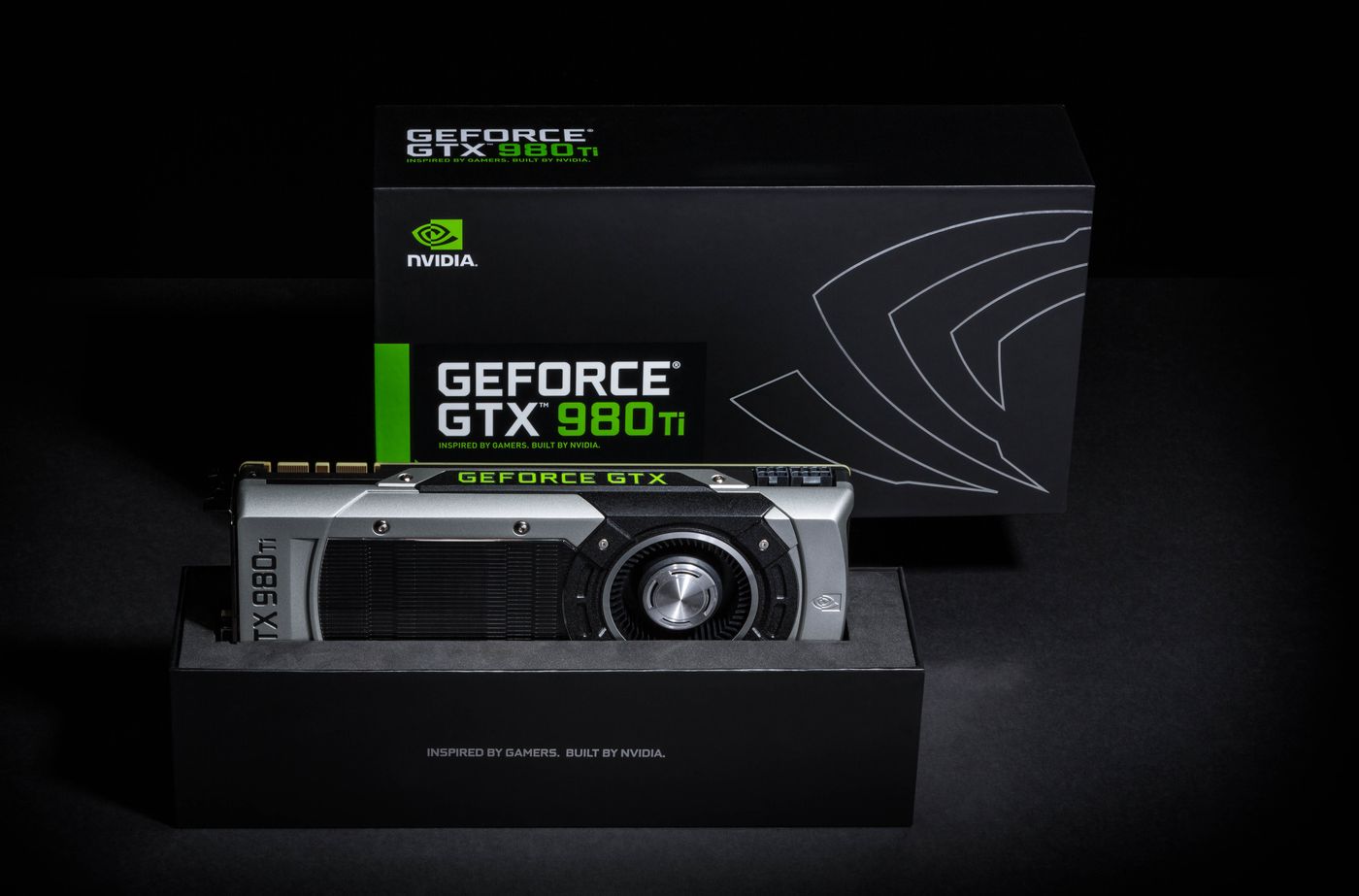
The GTX 980 Ti is built on Nvidia’s Maxwell architecture, which was well known for its efficiency and performance improvements over previous models. This GPU is equipped with 2816 CUDA cores, which are essential for parallel processing tasks. This feature makes the GTX 980 Ti suitable for demanding tasks, such as rendering graphics in video games and performing computations in cryptocurrency mining.
The base clock speed of the GTX 980 Ti is set at 1000 MHz, and it can boost up to 1075 MHz when needed. This boost in clock speed enhances the GPU’s performance, making it capable of handling intensive tasks more effectively. In mining operations, higher clock speeds can lead to faster hash rates, which measures the number of computations the GPU can perform per second.
Memory is a critical component for GPUs, particularly in mining, as it determines how much data the GPU can process at once. The GTX 980 Ti has 6GB of GDDR5 memory, which is more than adequate for many mining algorithms. Coupled with a 384-bit memory interface, it can deliver a memory bandwidth of 336. 5 GB/s. This high bandwidth is beneficial for mining since it allows the GPU to handle large data sets efficiently, improving its overall performance.
When it comes to power consumption, the GTX 980 Ti has a thermal design power (TDP) of 250W. This means that during operation, it is designed to draw a maximum of 250 watts of power. Miners need to account for this power requirement as it influences the overall cost of mining, especially regarding electricity bills.
The GTX 980 Ti supports DirectX 12 and OpenGL 4. 6, which enhances its compatibility with modern software applications and games. Although gaming is not its primary function in mining, these features ensure the GPU is versatile and can run a range of modern applications when not dedicated to mining tasks.
The Nvidia GeForce GTX 980 Ti remains a viable option for cryptocurrency mining, even years after its release. Its robust specifications, including high CUDA core count, significant memory, and impressive bandwidth, contribute to its effectiveness in mining operations. Despite newer models entering the market, the GTX 980 Ti holds its ground as a capable GPU in specific contexts, particularly where the cost-effectiveness of mining is a concern.
Summary of Nvidia GeForce GTX 980 TI Specifications:
- CUDA Cores : 2816
- Base Clock : 1000 MHz
- Boost Clock : 1075 MHz
- Memory Interface Width : 384-bit
- Memory Bandwidth : 336.5 GB/sec
- Standard Memory Config : 6 GB
- Memory Interface : GDDR5
- Texture Fill Rate : 176 GigaTexels/sec
- Memory Clock : 7.0 Gbps
A Powerful Tool for Cryptocurrency Mining
With a hashrate of 21. 5 MH/s for Ethereum mining and 250 MH/s for various Library cryptocurrencies, the GTX 980 TI showcases its robust capabilities in the ever-evolving realm of digital currency mining.
Cryptocurrency mining involves solving complex mathematical problems to validate transactions and secure a blockchain network. In exchange for this computational power, miners are rewarded with cryptocurrency. The GTX 980 TI excels particularly in mining Ethereum and other variations of the Ethash algorithm, which has become one of the most popular mining methods due to its accessibility and profitability.
The card’s hashrate of 21. 5 MH/s for DaggerHashimoto, which is used by Ethereum and Ethereum Classic, is a key highlight for enthusiasts. This performance is complemented by its ability to mine Zcash at a remarkable rate of 480 Sol/s, which showcases the card’s versatility across different cryptocurrencies. Zcash operates using the Equihash algorithm, and the GTX 980 TI’s efficiency in this area indicates that it can handle various mining requirements effectively.
Furthermore, the GTX 980 TI provides a hashrate of 1 MH/s for NeoScrypt mining, which includes coins like ORB, PXC, and FTC. Although the hashrate for NeoScrypt is lower compared to Ethereum and Zcash, the ability to mine a range of currencies broadens the scope of potential returns for users. The card also performs well with the Lyra2REv2 algorithm, achieving a hashrate of 36. 91 MH/s for cryptocurrencies such as Verge and Vertcoin.
This performance is particularly relevant as the demand for efficient mining solutions continues to rise. Miners need to consider both energy consumption and computational power when selecting hardware, and the GTX 980 TI balances these factors effectively. Moreover, while newer graphics cards have entered the market, the GTX 980 TI remains a cost-effective option for those starting their mining journey or looking to expand their operations without excessive investment.
The Nvidia GeForce GTX 980 TI stands out as a formidable choice for cryptocurrency miners. With its impressive hashrate capabilities across multiple algorithms, it provides a solid foundation for miners eager to explore the world of Ethereum, Zcash, and beyond. As the landscape of cryptocurrency continues to evolve, the GTX 980 TI remains relevant, emphasizing the importance of choosing the right hardware in the pursuit of successful mining endeavors.
One of the most notable aspects of the GTX 980 TI is its effective mining hashrate for Decred, which stands at approximately 2. 4 GH/s. This considerable performance makes it suitable for miners aiming to capitalize on Decred’s unique proof-of-work system. Beyond Decred, the GTX 980 TI is also efficient in mining cryptocurrencies that utilize the Cryptonight algorithm, such as Monero (XMR) and DigitalNote (XDN), achieving a hashrate of around 0. 7 kH/s. The significance of these cryptocurrencies lies in their focus on privacy, making them attractive for users who prioritize anonymity in their transactions.
Another algorithm that benefits from the GTX 980 TI is Equihash, which is employed by cryptocurrencies like Zcash (ZEC), ZenCash (ZEN), and Bitcoin Gold (BTG). The hashrate for Equihash on the GTX 980 TI reaches approximately 461 Sol/s. Zcash, as a prominent privacy-focused cryptocurrency, illustrates the relevance of the GTX 980 TI in the current mining landscape. Moreover, the card also provides substantial performance for Pascal coins, achieving a hashrate of 0. 98 GH/s. This capability enables miners to diversify their portfolios by tapping into various altcoins.
The GTX 980 TI offers impressive performance in mining using the X11GOST algorithm, particularly with Sibcoin (SIB), where it can achieve up to 13. 3 MH/s. This showcases the card’s versatility and adaptability as a mining solution.
Summary of Nvidia GeForce GTX 980 TI Hashrate:
- Ethereum Mining Hashrate : 21.5 MH/s
- Library Mining Hashrate : 250 MH/s
- Zcash Mining Hashrate : 480 Sol/s
- NeoScrypt [ (ORB) & (PXC) & (FTC) & (INN) & (GBX) & (TZC) & (VIVO) & (CRC) ] : 1 MH/s
- Lyra2REv2 [ (XVG) & (VTC) & (MONA) ] Mining Hashrate : 36.91 MH/s
- DaggerHashimoto [ EtHash : (ETH) & (ETC) ] Mining Hashrate : 21.57 MH/s
- Decred (DCR) Mining Hashrate : 2.4 GH/s
- Cryptonight [ (XMR) & (XDN) ] Mining Hashrate : 0.7 kH/s
- Lbry ( LBC ) Mining Hashrate : 0.24 GH/s
- Equihash [ (ZEC – ZEN – ZCL) & (BTG) & (KMD) & (HUSH) ] Mining Hashrate : 461 Sol/s
- Pascal [ (PASC) & (PASL) ] Mining Hashrate : 0.98 GH/s
- X11GOST [ Sibcoin (SIB) ] Mining Hashrate : 13.3 MH/s
Nvidia GeForce GTX 980 TI From Amazon
Power Consumption : 250 Watts/Per Hour
ASUS Dual Radeon™ RX 9060 XT 16GB GDDR6 Graphics Card (PCIe 5.0, HDMI 2.1b, DisplayPort 2.1a, 2.5-Slot Design, Axial-tech Fan Design, 0dB Technology, and More)
$489.99 (as of 29/01/2026 10:59 GMT +02:00 - More infoProduct prices and availability are accurate as of the date/time indicated and are subject to change. Any price and availability information displayed on [relevant Amazon Site(s), as applicable] at the time of purchase will apply to the purchase of this product.)
ASRock AMD Radeon RX 9070 XT Steel Legend 16GB White GPU 20Gbps GDDR6 256Bit (3rd Gen RT 2nd Gen AI Accelerators) PCIe5.0 800W 2x8-pin Triple Fan DP2.1a HDMI2.1b Graphics Card 2.9 Slot
$739.99 (as of 29/01/2026 10:59 GMT +02:00 - More infoProduct prices and availability are accurate as of the date/time indicated and are subject to change. Any price and availability information displayed on [relevant Amazon Site(s), as applicable] at the time of purchase will apply to the purchase of this product.)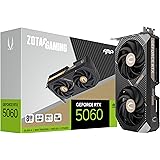
ZOTAC Gaming GeForce RTX 5060 AMP DLSS 4 8GB GDDR7 128-bit 28 Gbps PCIE 5.0 Gaming Graphics Card, IceStorm 2.0 Cooling, ZT-B50600F-10M
$399.99 (as of 29/01/2026 10:59 GMT +02:00 - More infoProduct prices and availability are accurate as of the date/time indicated and are subject to change. Any price and availability information displayed on [relevant Amazon Site(s), as applicable] at the time of purchase will apply to the purchase of this product.)
ASUS Prime Radeon™ RX 9070 XT OC Edition Graphics Card (PCIe 5.0, HDMI/DP 2.1, 2.5-Slot Design, axial-tech Fans, Dual Ball Fan Bearings, Dual BIOS, GPU Guard)
$799.99 (as of 29/01/2026 10:59 GMT +02:00 - More infoProduct prices and availability are accurate as of the date/time indicated and are subject to change. Any price and availability information displayed on [relevant Amazon Site(s), as applicable] at the time of purchase will apply to the purchase of this product.)