

Exploring the NVIDIA GeForce GTX 750 Ti: An Overview
The NVIDIA GeForce GTX 750 Ti is a notable graphics card, recognized for its efficiency and performance in both gaming and cryptocurrency mining. One of its significant features is its hashrate of approximately 6. 99 MH/s when mining Ravencoin (RVN) using the KawPow algorithm with the NBMiner software. This impressive capability makes the GTX 750 Ti a popular choice among miners seeking a balance between affordability and functionality.
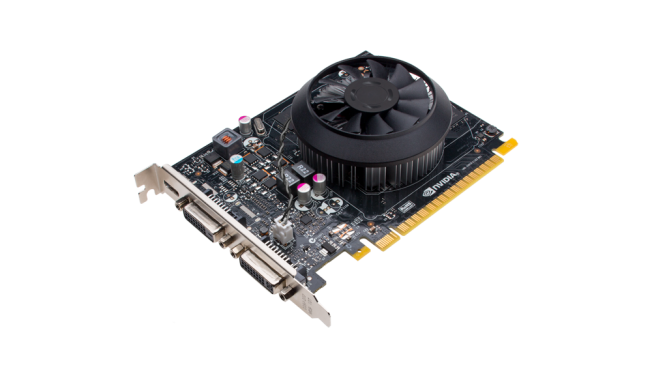
Nvidia Geforce GTX 750 TI Card
At the heart of the GTX 750 Ti are its 640 CUDA cores. CUDA cores are essential for parallel processing, allowing the GPU to handle multiple tasks simultaneously. This architecture enables the card to perform well in intensive applications such as mining. The base clock speed of 1020 MHz and a boost clock of 1085 MHz enhance its processing capabilities, allowing for better performance during demanding tasks.
The memory configuration of the GTX 750 Ti is another crucial aspect. It features a 128-bit memory interface with a memory bandwidth of 86. 4 GB/sec. This specification defines how quickly data can be transferred to and from the GPU. A higher memory bandwidth means faster performance, particularly in applications that require significant data flow, such as performing complex calculations during mining.
The GTX 750 Ti comes equipped with 2GB of GDDR5 memory. While this amount may seem limited compared to modern graphics cards that often have 8GB or more, it is sufficient for entry-level mining tasks. The GDDR5 memory type is faster than older memory types, contributing to the overall speed and efficiency of the card. The memory speed of 5. 4 Gbps is also a notable feature that aids in performance.
The demand for cryptocurrency mining has surged recently. Enthusiasts and miners often look for viable options that do not require massive investments. The GTX 750 Ti meets this need by providing a cost-effective solution without compromising much on performance. While newer and more powerful GPUs are available, the GTX 750 Ti remains relevant in the mining community due to its reasonable hashrate and energy efficiency.
The NVIDIA GeForce GTX 750 Ti stands out as a capable graphics card for both gaming and cryptocurrency mining. Its specifications, including CUDA cores, clock speeds, memory configuration, and hashrate, make it an attractive option for those entering the mining arena. Despite the advancements in technology and newer models, the GTX 750 Ti continues to be a favorable choice for budget-conscious miners who seek reliability and decent performance.
Summary of the Nvidia Geforce GTX 750 TI Specifications :
- CUDA Cores : 640
- Base Clock : 1020 MHz
- Boost Clock : 1085 MHz
- Memory Interface Width : 128-bit
- Memory Bandwidth : 86.4 GB/sec
- Memory Speed : 5.4 Gbps
- Standard Memory Config : 2048 MB
- Memory Interface : GDDR5
The Mining Capabilities of the NVIDIA GeForce GTX 750 Ti
With a maximum hashrate of approximately 6. 99 MH/s when mining Ravencoin using the KawPow algorithm, the GTX 750 Ti offers a viable option for those looking to engage in mining activities. This essay will explore the hashrate, power consumption, and overall value of the GTX 750 Ti in the world of cryptocurrency mining.
The hashrate is a critical measure in cryptocurrency mining, representing the number of calculations that a mining device can perform per second. For the GTX 750 Ti, a hashrate of 6. 99 MH/s is significant for small-scale mining operations. Additionally, it is capable of mining several other cryptocurrencies, including Ethereum, which has a hashrate of around 6 MH/s, and Zcash, which can achieve approximately 35 Sol/s. Other cryptocurrencies like Decred, LBRY, and Pascal also have specific hashrates associated with the GTX 750 Ti, allowing miners to choose their preferred coin based on profitability and market demand.
Power consumption is another vital factor to consider when evaluating a graphics card for mining purposes. The GTX 750 Ti is known for its low power consumption, operating at around 75 Watts per hour. This efficiency not only reduces electricity costs for miners but also makes the card suitable for various system builds, especially for those who may have concerns about power supply limitations. This trait places the GTX 750 Ti as an attractive option for beginners in the mining field or those who wish to add a mining component to their existing gaming setups without the overhead of excessive power usage.
The ability of the GTX 750 Ti to coordinate with modern software and protocols further enhances its utility. It supports technologies such as DirectX 12 and OpenGL 4. 6, providing versatility for both gaming and mining operations. While newer graphics cards have entered the market with higher performance and hashrates, the affordability and efficiency of the GTX 750 Ti continue to make it relevant, especially for entry-level miners.
The NVIDIA GeForce GTX 750 Ti serves as a practical choice for individuals interested in cryptocurrency mining. With a respectable hashrate, low power consumption, and compatibility with modern gaming and mining software, it remains a valuable asset in the cryptocurrency landscape. As more people explore the world of digital currencies, the GTX 750 Ti addresses the need for an accessible and efficient mining option, making it an enduring part of the mining community.
The NVIDIA GeForce GTX 750 Ti Mining Capabilities
The NVIDIA GeForce GTX 750 Ti was designed primarily for gaming but has found a niche among cryptocurrency miners due to its efficiency and decent hashrates. As the world of digital currencies continues to evolve, understanding the capabilities of cards like the GTX 750 Ti can provide insight into the broader mining landscape.
A significant aspect of cryptocurrency mining is the hashrate, which measures a miner’s performance in solving complex mathematical problems to validate transactions. The GTX 750 Ti offers various hashrates for different cryptocurrencies, showcasing its versatility. For example, when it comes to Ethereum, the hashrate is approximately 6 mega hashes per second (MH/s). However, it’s important to note that Ethereum has transitioned from a Proof-of-Work (PoW) consensus mechanism to Proof-of-Stake (PoS), which means it can no longer be mined. This change reflects the broader shifts in the cryptocurrency space seeking to become more energy-efficient.
In contrast, for Zcash, another cryptocurrency, the GTX 750 Ti provides an impressive hashrate of 35 sol/s (solutions per second). This performance places it among the viable options for miners focused on Zcash. Additionally, the card yields a hashrate of approximately 0. 16 MH/s for NeoScrypt coins, 6. 54 MH/s for Lyra2REv2, and 0. 51 gigahashes per second (GH/s) for Decred. Each of these currencies represents a different mining algorithm, which the GTX 750 Ti handles with varying degrees of efficiency.
Moreover, for coins using the Cryptonight algorithm, the GTX 750 Ti achieves a hashrate of about 0. 25 kH/s. This lower hashrate indicates that while the card is capable, it may not be the best choice for Cryptonight mining compared to newer, more powerful graphics cards. The card also shows a lower performance in mining other currencies, like LBRY and Pascal, with hashrates of 0. 05 GH/s and 0. 18 GH/s, respectively.
Summary of the Nvidia Geforce GTX 750 TI Hashrate
- Ethereum Mining Hashrate : 6 MH/s
- Zcash Mining Hashrate : 35 sol/s
- NeoScrypt [ (ORB) & (PXC) & (FTC) & (INN) & (GBX) & (TZC) & (VIVO) & (CRC) ] Mining Hashrate : 0.16 MH/s
- Lyra2REv2 [ (XVG) & (VTC) & (MONA) ] Mining Hashrate : 6.54 MH/s
- Decred (DCR) Mining Hashrate : 0.51 GH/s
- Cryptonight [ (XMR) & (XDN) ] Mining Hashrate : 0.25 kH/s
- Lbry ( LBC ) Mining Hashrate : 0.05 GH/s
- Equihash [ (ZEC – ZEN – ZCL) & (BTG) & (KMD) & (HUSH) ] Mining Hashrate : 74.4 Sol/s
- Pascal [ (PASC) & (PASL) ] Mining Hashrate : 0.18 GH/s
- X11GOST [ Sibcoin (SIB) ] Mining Hashrate : 2.6 MH/s
Power Consumption : 75 Watt/Per Hour .
The Importance of Understanding Mining Currencies
Mining currencies, often referred to as cryptocurrencies, have gained immense popularity in recent years. The process of mining involves using powerful computers to solve complex mathematical problems, thereby validating transactions on the blockchain. This essay will explore the key concepts associated with mining currencies, including hashrate, sol/s, the transition of Ethereum, and factors influencing profitability.
One of the essential metrics in mining is the hashrate. Hashrate refers to the processing power used for mining cryptocurrencies. It indicates how many calculations a miner can perform every second. A higher hashrate typically leads to faster mining, increasing a miner’s chances of receiving rewards in the form of cryptocurrency. For instance, if a miner has a hashrate of 100 megahashes per second (MH/s), it means their equipment can execute 100 million calculations in one second. As cryptocurrencies become more popular, miners continually seek better hardware to maintain a high hashrate.
Another important term in the mining process is sol/s, which stands for solutions per second. This term is particularly relevant to specific algorithms such as Equihash that are used in mining certain cryptocurrencies. Sol/s measures how efficiently a miner can find solutions to the mathematical problems required for validating transactions on the blockchain. Just like hashrate, a higher sol/s indicates better mining performance and quicker potential rewards.
Ethereum, one of the most well-known cryptocurrencies, transitioned to a Proof-of-Stake (PoS) model from its former Proof-of-Work (PoW) mechanism. This change means that Ethereum can no longer be mined in the traditional sense. Instead, users can now stake their existing Ethereum to help secure the network and earn rewards. This significant shift highlights the evolving nature of cryptocurrency mining and the necessity for miners and investors to stay informed about trends in the industry.
Profitability is another critical concern for those involved in mining currencies. The profitability of mining is influenced by a variety of factors, such as electricity costs, hardware efficiency, and the current market value of the mined cryptocurrency. For example, if electricity costs are high, the expenses may outweigh the rewards gained from mining. Similarly, if the market value of the cryptocurrency fluctuates, miners may need to reconsider their strategies to remain profitable.
Understanding the key concepts related to mining currencies is crucial for anyone interested in participating in this field. By mastering terms like hashrate and sol/s, being aware of significant changes like Ethereum’s shift to Proof-of-Stake, and factoring in profitability variables, aspiring miners can make informed decisions in this rapidly evolving landscape. As technology continues to advance, staying knowledgeable about these aspects will enhance the chances of success in the world of cryptocurrency mining.
Nvidia Geforce GTX 750 TI From Amazon
upHere 5V 3PIN Addressable RGB Graphics Card GPU Brace Support Video Card Sag Holder,Built-in 5V ARGB Strip,Adjustable Length and Height Support,G276ARGB
$15.99 (as of 11/03/2026 12:57 GMT +02:00 - More infoProduct prices and availability are accurate as of the date/time indicated and are subject to change. Any price and availability information displayed on [relevant Amazon Site(s), as applicable] at the time of purchase will apply to the purchase of this product.)
Uyubao GPU Support Bracket, Gpu Anti Sag Bracket, Graphics Card GPU Brace Support, Video Card Sag Holder Bracket, GPU Stand with Magnet & Non-Slip Sheet, L(74-120mm)
$4.99 (as of 11/03/2026 12:57 GMT +02:00 - More infoProduct prices and availability are accurate as of the date/time indicated and are subject to change. Any price and availability information displayed on [relevant Amazon Site(s), as applicable] at the time of purchase will apply to the purchase of this product.)
ASUS ROG Astral GeForce RTX 5090 BTF OC Edition, 32GB GDDR7, 3.8-Slot, 1000W Support
$4,191.55 (as of 11/03/2026 12:57 GMT +02:00 - More infoProduct prices and availability are accurate as of the date/time indicated and are subject to change. Any price and availability information displayed on [relevant Amazon Site(s), as applicable] at the time of purchase will apply to the purchase of this product.)
GIGABYTE Radeon RX 9060 XT Gaming OC 16G Graphics Card, PCIe 5.0, 16GB GDDR6, GV-R9060XTGAMING OC-16GD Video Card
$459.99 (as of 11/03/2026 12:57 GMT +02:00 - More infoProduct prices and availability are accurate as of the date/time indicated and are subject to change. Any price and availability information displayed on [relevant Amazon Site(s), as applicable] at the time of purchase will apply to the purchase of this product.)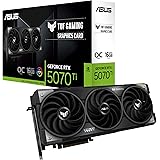
ASUS TUF GeForce RTX™ 5070 Ti 16GB GDDR7 OC Edition Graphics Card, NVIDIA, Desktop (PCIe® 5.0, HDMI®/DP 2.1, 3.125-Slot, Military-Grade Components, Protective PCB Coating, Axial-tech Fans)
$1,069.99 (as of 11/03/2026 12:57 GMT +02:00 - More infoProduct prices and availability are accurate as of the date/time indicated and are subject to change. Any price and availability information displayed on [relevant Amazon Site(s), as applicable] at the time of purchase will apply to the purchase of this product.)