

The Nvidia GeForce GTX 1080, launched in 2016, was a high-end graphics card based on the Pascal architecture. This architecture represented a significant leap forward in graphics processing technology. It brought improvements in performance, power efficiency, and features. The GTX 1080 was built on a 16nm FinFET process. This allowed for a denser transistor count and improved energy efficiency compared to previous generations.
At the heart of the GTX 1080 lies the GP104 GPU. It features 2560 CUDA cores, Nvidia’s parallel processing units. These cores are responsible for handling the complex calculations involved in rendering graphics and performing other computational tasks. The GTX 1080 has a base clock speed of 1607 MHz and a boost clock speed of 1733 MHz. This allows it to dynamically adjust its operating frequency based on the workload and thermal conditions.
The GTX 1080 is equipped with 8 GB of GDDR5X memory. This memory operates at a speed of 10 Gbps across a 256-bit interface. This provides a memory bandwidth of 320 GB/sec, which is crucial for feeding the GPU with the data it needs to render high-resolution textures and complex scenes.
The Pascal architecture introduced several new features. Simultaneous Multiprojection allows the GPU to render multiple viewpoints of a scene in a single pass. This improves performance in virtual reality applications. Another key feature is Ansel, a tool that allows users to capture high-resolution in-game screenshots and 360-degree images.
Performance in Gaming
The GTX 1080 delivered a significant performance boost compared to its predecessors. It allowed gamers to experience smooth frame rates at 1440p and 4K resolutions. In many titles, it provided a noticeable improvement over the GTX 980 Ti. It offered a smoother and more immersive gaming experience.
The card excelled in demanding games. It delivered high frame rates with maximum graphics settings enabled. This made it a popular choice among enthusiasts and gamers looking to build high-end gaming rigs. Its ability to handle complex scenes, high-resolution textures, and advanced visual effects contributed to its reputation as a top-tier gaming GPU.
Beyond raw performance, the GTX 1080 supported technologies. Nvidia’s GameWorks enhanced visual fidelity in supported titles. These technologies added realistic lighting, shadows, and physics effects. This created more immersive and visually appealing gaming experiences.
Impact on Cryptocurrency Mining
Beyond gaming, the GTX 1080 also gained popularity among cryptocurrency miners. Its powerful GPU and relatively efficient power consumption made it a viable option for mining various cryptocurrencies.
The GTX 1080’s performance in mining Ethereum (ETH) was notable. It achieved a hash rate of around 20 MH/s at stock settings. With overclocking, this could be pushed to around 27 MH/s. This made it an attractive option for miners looking to maximize their returns.
The card also performed well in mining other cryptocurrencies. Zcash (ZEC), Monero (XMR), and other altcoins saw competitive hash rates. This contributed to the card’s popularity in the mining community. The specific hash rates achieved depended on various factors. These factors include the mining algorithm, software used, and the degree of overclocking applied.
The increased demand from cryptocurrency miners led to shortages and price increases. This made it difficult for gamers to purchase the card. This situation highlighted the complex relationship between the gaming and cryptocurrency markets.
Overclocking and Customization
The GTX 1080 was known for its overclocking potential. Enthusiasts were able to push the card beyond its stock clock speeds. This resulted in even greater performance in both gaming and mining.
By adjusting the core clock and memory clock speeds, users could achieve significant gains. This required careful monitoring of temperatures and power consumption. This ensured stable operation. Custom cooling solutions, such as aftermarket coolers and water blocks, were often used. This helped to dissipate heat and allow for higher overclocks.
The overclocking settings for mining differed from those used for gaming. Miners often prioritized power efficiency over maximum clock speeds. This reduced electricity costs and extended the lifespan of the card. The specified overclocking settings for Ethereum, Zcash, and Monero mining provided a starting point for users. Users can fine-tune their settings for optimal performance.
Power Consumption and Efficiency
The GTX 1080 had a power consumption of 180 watts. This made it relatively efficient compared to other high-end graphics cards. Its power efficiency was a key factor in its popularity among both gamers and miners.
The Pascal architecture incorporated several power-saving features. These features reduced energy consumption during idle and low-workload scenarios. This contributed to its overall efficiency.
The supplementary power connectors required for the GTX 1080 included a single 8-pin connector. This provided sufficient power to meet the card’s demands. It also allowed for additional headroom for overclocking.
Comparison to Competitors
The GTX 1080 competed with other high-end graphics cards. The AMD Radeon RX Vega series was its main competitor. While the RX Vega offered competitive performance in some areas, the GTX 1080 generally outperformed it. It offered greater power efficiency in most gaming titles.
The GTX 1080 also faced competition from its own successor, the GTX 1080 Ti. The 1080 Ti offered a significant performance boost over the 1080. It positioned itself as the top-end single-GPU solution.
Legacy and Influence
The GTX 1080 left a lasting impact on the graphics card market. It set a new standard for performance and power efficiency. It influenced the design and development of future generations of GPUs.
Its success demonstrated the importance of architectural innovation and efficient memory technology. These became key factors in achieving high-end performance. The GTX 1080 also highlighted the growing demand for graphics cards. It showed the demand comes from both gamers and cryptocurrency miners.
Future Developments
Since the release of the GTX 1080, the graphics card market has seen significant advancements. Nvidia has released multiple generations of GPUs. These generations include the RTX 20 series, RTX 30 series, and RTX 40 series. These cards incorporate new architectures, such as Turing, Ampere, and Ada Lovelace. They offer improved performance, ray tracing capabilities, and AI-powered features.
AMD has also made strides in the graphics card market. They have released the Radeon RX 6000 series and RX 7000 series. These cards provide competitive performance. They offer features such as ray tracing and variable rate shading.
The future of graphics processing is likely to involve further advancements in architecture. It will also involve memory technology, and integration of AI. Ray tracing and other advanced visual effects will become more prevalent. Cloud gaming and streaming services will continue to grow. This will reduce the reliance on local hardware.
The Nvidia GeForce GTX 1080 was a landmark graphics card. It delivered exceptional performance, power efficiency, and features. It impacted gaming and cryptocurrency mining. Its legacy continues to influence the development of graphics processing technology. Its architecture, performance, and popularity have made it a significant milestone in the history of GPUs.
Nvidia Geforce GTX 1080 Structure :
- NVIDIA CUDA® Cores : 2560
- Base Clock : 1607 MHz
- Boost Clock : 1733 MHz
- Memory Interface Width : 256-bit
- Memory Bandwidth : 320 GB/sec
- Memory Speed : 10 Gbps
- Standard Memory Config : 8 GB GDDR5X

- Ethereum Mining Hashrate : 20 MH/s
OverClocking Hashrate : 27 MH/s
- Zcash Mining Hashrate : 470 sol/s
OverClocking Hashrate : 550 sol/s
- Monero Mining Hashrate : 600 H/S
OverClocking Hashrate : 850 sol/s
- KECCAK Mining Hashrate : 1070.56 MH/s
- NeoScrypt [ (ORB) & (PXC) & (FTC) & (INN) & (GBX) & (TZC) & (VIVO) & (CRC) ] Mining Hashrate :0.81 MH/s
- Lyra2REv2 [ (XVG) & (VTC) & (MONA) ] Mining Hashrate : 56.15 MH/s
- DaggerHashimoto [ EtHash : (ETH) & (ETC) ] Mining Hashrate : 24.5 MH/s
- Decred (DCR) Mining Hashrate : 3.86 GH/s
- Cryptonight [ (XMR) & (XDN) ] Mining Hashrate : 0.50 kH/s
- CryptoNightV7 Mining Hashrate : 0.58 KH/s
- Lbry ( LBC ) Mining Hashrate : 0.40 GH/s
- Equihash [ (ZEC – ZEN – ZCL) & (BTG) & (KMD) & (HUSH) ] Mining Hashrate : 575.67 Sol/s
- Pascal [ (PASC) & (PASL) ] Mining Hashrate : 1.41 GH/s
- SIACOIN (SC) Mining Hashrate : 2.41 GH/s
- BLAKE2S Mining Hashrate : 5.58 GH/s
GTX 1080 OverClocking Settings :
- Power :
- Ethereum : 70%
- Zcash : 85%
- Monero : 85%
- Core : +100
- Memory : +400
Power Consumption : 180 Watt/Per Hour
Supplementary Power Connectors : 8-Pin.
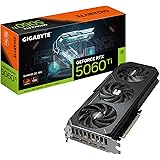
GIGABYTE GeForce RTX 5060 Ti Gaming OC 16G Graphics Card, by NVIDIA,16GB 128-bit GDDR7, PCIe 5.0, WINDFORCE Cooling System,DisplayPort & HDMI - Video Output Interface,GV-N506TGAMING OC-16GD Video Card
$549.99 (as of 11/03/2026 12:57 GMT +02:00 - More infoProduct prices and availability are accurate as of the date/time indicated and are subject to change. Any price and availability information displayed on [relevant Amazon Site(s), as applicable] at the time of purchase will apply to the purchase of this product.)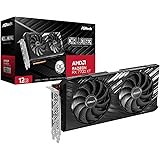
ASRock AMD Radeon RX 7700 XT Challenger 12GB GDDR6 192-bit 0dB Silent Cooling 7680 x 4320 DisplayPort HDMI LED Indicator 18Gbps Dual Fan Graphics Card
$399.99 (as of 11/03/2026 12:57 GMT +02:00 - More infoProduct prices and availability are accurate as of the date/time indicated and are subject to change. Any price and availability information displayed on [relevant Amazon Site(s), as applicable] at the time of purchase will apply to the purchase of this product.)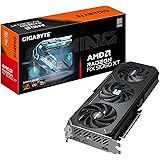
GIGABYTE Radeon RX 9060 XT Gaming OC 16G Graphics Card, PCIe 5.0, 16GB GDDR6, GV-R9060XTGAMING OC-16GD Video Card
$459.99 (as of 11/03/2026 12:57 GMT +02:00 - More infoProduct prices and availability are accurate as of the date/time indicated and are subject to change. Any price and availability information displayed on [relevant Amazon Site(s), as applicable] at the time of purchase will apply to the purchase of this product.)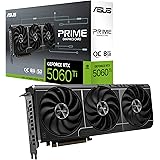
ASUS The SFF-Ready Prime GeForce RTX™ 5060 Ti 8GB GDDR7 OC Edition Graphics Card (PCIe® 5.0, 8GB GDDR7, HDMI®/DP 2.1, 2.5-Slot, Axial-tech Fans, Dual BIOS)
$415.99 (as of 11/03/2026 12:57 GMT +02:00 - More infoProduct prices and availability are accurate as of the date/time indicated and are subject to change. Any price and availability information displayed on [relevant Amazon Site(s), as applicable] at the time of purchase will apply to the purchase of this product.)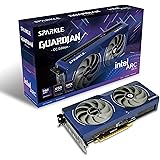
Sparkle Intel Arc B570 Guardian OC Graphics Card, 10GB GDDR6, Torn Cooling 2.0, Axial Fan, Breathing Light, Metal Backplate, SB570G-10GOC
$227.88 (as of 11/03/2026 12:57 GMT +02:00 - More infoProduct prices and availability are accurate as of the date/time indicated and are subject to change. Any price and availability information displayed on [relevant Amazon Site(s), as applicable] at the time of purchase will apply to the purchase of this product.)