

A Mining Powerhouse the AMD Radeon RX 470
The Nvidia GeForce GTX 1060, particularly the 3GB RAM version, has been a popular choice for cryptocurrency mining among enthusiasts. Launched as part of Nvidia’s Pascal architecture, the GTX 1060 offers a balance of performance and power efficiency, making it an attractive option for miners looking to tap into the world of digital currencies.
One of the key aspects of the GTX 1060 is its hashrate performance across various algorithms. For instance, when mining Siacoin (SC), a cryptocurrency specifically designed for decentralized storage, the GTX 1060 can achieve a hashrate of about 1. 02 GH/s. This indicates the number of calculations the graphics card can perform per second, which is critical in the competitive environment of cryptocurrency mining. A higher hashrate helps miners solve complex algorithms more quickly, leading to higher rewards.
Similarly, when mining cryptocurrencies that utilize hashing algorithms like Blake2s, the GTX 1060 can achieve impressive performance, reaching a hashrate of around 2. 38 GH/s. This capability showcases the versatility of the GTX 1060 in handling different mining types, which is advantageous for miners who diversify their portfolios across various coins and tokens. The ability to adjust mining strategies based on a card’s performance can maximize returns and hedges against the volatility of individual cryptocurrencies.
The Pascal architecture brings significant advancements in energy efficiency. The GTX 1060 consumes less power compared to its predecessors, allowing miners to operate their rigs for extended periods without incurring astronomical electricity bills. This factor is crucial since electricity costs often can exceed the earnings from mining, especially during periods of low cryptocurrency prices. With the GTX 1060’s efficiency, miners can achieve a better return on investment, making it a sensible choice for those starting in the mining realm. While some may argue that newer models provide better performance, the GTX 1060 continues to hold its ground due to its cost-effectiveness and availability. As the digital currency landscape evolves, the GTX 1060’s reliability and performance ensure it remains a significant player in the mining community.
Summary of the AMD Radeon RX 470 Specifications :
- COMPUTE UNITS : 32 CUs
- STREAM PROCESSORS : 2048
- MEMORY BANDWIDTH : 211 GB/s
- MEMORY INTERFACE : 256 bit
- MEMORY TYPE : GDDR5
- MEMORY CLOCK SPEED : 1650 MHZ
- CLOCK SPEEDS : 1206 / 926 MHz ( Boost / Base )
- PEAK PERFORMANCE : 4.9 TFLOPs

The AMD Radeon RX 470 Hasrate in the Cryptocurrency Mining
The AMD Radeon RX 470 is recognized for its solid performance in mining Ethereum, Zcash, and Monero. In terms of Ethereum mining, the RX 470 achieves a hashrate of around 21 MH/s (megahashes per second), which can increase significantly with overclocking. When overclocked, users have reported achieving a hashrate of up to 27 MH/s. This boost in performance makes it an attractive option for those focused on mining Ethereum, especially during times when Ethereum’s market value increases, leading to greater profits for miners.
For Zcash, another prominent cryptocurrency, the RX 470 delivers a mining hashrate of approximately 250 sol/s (solutions per second). After tweaking its settings, miners can push this hashrate to about 270 sol/s. Zcash, known for its privacy features, remains a sought-after currency, and the RX 470 allows miners to tap into this market effectively.
Monero, a cryptocurrency focused on security and anonymity, is another area where the RX 470 shines. The typical hashrate for Monero mining is around 525 H/s (hashes per second). With the right overclocking settings, miners can potentially reach up to 663 H/s. This demonstrates the versatility of the RX 470 as it can cater to different mining algorithms and requirements.
To achieve the listed hashrates, miners often adjust specific overclocking settings. For the RX 470, users typically lower the voltage to around -60, set the core clock speed to 1150 MHz, and the memory speed to 1950 MHz. These adjustments can lead to a power consumption of about 120 watts per hour, which is reasonable compared to the mining output.
The DaggerHashimoto algorithm, which is used primarily for mining Ethereum (ETH) and Ethereum Classic (ETC), is one of the most notable applications of the RX 470. With a hashrate of approximately 25. 07 MH/s, the RX 470 offers miners a competitive edge in earning these popular cryptocurrencies. Ethereum remains one of the most widely mined coins, and the RX 470’s efficiency in this area helps miners maximize their profit margins.
In addition to DaggerHashimoto, the RX 470 is capable of mining Cryptonight-based coins such as Monero (XMR) and DigitalNote (XDN). Its hashrate for this algorithm is reported at about 0. 65 kH/s. Although this may seem lower compared to its performance in DaggerHashimoto, Cryptonight has gained traction due to its focus on privacy and security in transactions. As privacy coins become more relevant in the digital financial landscape, the ability of the RX 470 to mine these currencies adds versatility to its use in cryptocurrency mining.
The RX 470 shows potential in mining with the Equihash algorithm, popular among coins like Zcash (ZEC) and Zencash (ZEN). The hashrate for Equihash sits at a notable 280 Sol/s. This performance is encouraging for miners targeting privacy-focused cryptocurrencies, expanding the capability of the card beyond just mainstream options.
Other algorithms that the RX 470 can tackle include Pascal and X11GOST. In Pascal mining, the card achieves a hashrate of approximately 0. 65 GH/s while it hits 6. 2 GH/s for X11GOST, specifically for coins like Sibcoin (SIB). This indicates that the RX 470 is not limited to just one or two types of cryptocurrencies but is versatile and adaptable to various cryptographic mining needs.
The AMD Radeon RX 470 4GB graphics card stands out in cryptocurrency mining for its strong performance across multiple algorithms. Its capabilities in DaggerHashimoto, Cryptonight, and Equihash make it an appealing choice for miners seeking to diversify their portfolios. Its respectable hashrates for Ethereum, Zcash, and Monero, coupled with the potential improvements through overclocking, make it a valuable investment for mining enthusiasts. As the cryptocurrency market continues to evolve, hardware like the RX 470 remains crucial for those looking to excel in this dynamic field. Understanding the performance characteristics and optimization methods is vital for anyone aiming to succeed in cryptocurrency mining.
Summary of the AMD Radeon RX 470 4GB :
- DaggerHashimoto [ EtHash : (ETH) & (ETC) ] Mining Hashrate : 25.07 MH/s
- Cryptonight [ (XMR) & (XDN) ] Mining Hashrate : 0.65 kH/s
- CryptoNightV7 Mining Hashrate : 0.65 KH/s
- Equihash [ (ZEC – ZEN – ZCL) & (BTG) & (KMD) & (HUSH) ] Mining Hashrate : 280 Sol/s
- Pascal [ (PASC) & (PASL) ] Mining Hashrate : 0.65 GH/s
- X11GOST [ Sibcoin (SIB) ] Mining Hashrate : 6.2 GH/s
- Ethereum Mining Hashrate : 21 MH/s
OverClocking Hashrate : 27 MH/s
- Zcash Mining Hashrate : 250 sol/s
OverClocking Hashrate : 270 sol/s
- Monero Mining Hashrate : 525 H/S
OverClocking Hashrate : 663 H/S
RX 470 OverClocking Settings :
- Voltage : -60
- Core : 1150
- Memory : 1950
Power Consumption : 120 Watt/Per Hour
Price : 250-300$
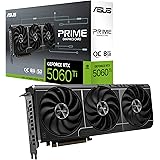
ASUS The SFF-Ready Prime GeForce RTX™ 5060 Ti 8GB GDDR7 OC Edition Graphics Card (PCIe® 5.0, 8GB GDDR7, HDMI®/DP 2.1, 2.5-Slot, Axial-tech Fans, Dual BIOS)
$415.99 (as of 11/03/2026 13:57 GMT +03:00 - More infoProduct prices and availability are accurate as of the date/time indicated and are subject to change. Any price and availability information displayed on [relevant Amazon Site(s), as applicable] at the time of purchase will apply to the purchase of this product.)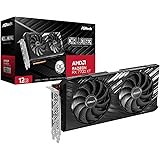
ASRock AMD Radeon RX 7700 XT Challenger 12GB GDDR6 192-bit 0dB Silent Cooling 7680 x 4320 DisplayPort HDMI LED Indicator 18Gbps Dual Fan Graphics Card
$399.99 (as of 11/03/2026 13:57 GMT +03:00 - More infoProduct prices and availability are accurate as of the date/time indicated and are subject to change. Any price and availability information displayed on [relevant Amazon Site(s), as applicable] at the time of purchase will apply to the purchase of this product.)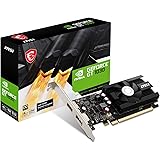
msi Gaming GeForce GT 1030 4GB DDR4 64-bit HDCP Support DirectX 12 DP/HDMI Single Fan OC Graphics Card (GT 1030 4GD4 LP OC)
$118.51 (as of 11/03/2026 13:57 GMT +03:00 - More infoProduct prices and availability are accurate as of the date/time indicated and are subject to change. Any price and availability information displayed on [relevant Amazon Site(s), as applicable] at the time of purchase will apply to the purchase of this product.)
Uyubao GPU Support Bracket, Gpu Anti Sag Bracket, Graphics Card GPU Brace Support, Video Card Sag Holder Bracket, GPU Stand, S(30-60mm)
$5.99 (as of 11/03/2026 13:57 GMT +03:00 - More infoProduct prices and availability are accurate as of the date/time indicated and are subject to change. Any price and availability information displayed on [relevant Amazon Site(s), as applicable] at the time of purchase will apply to the purchase of this product.)
XFX Radeon RX 7900XT Gaming Graphics Card with 20GB GDDR6, AMD RDNA 3 RX-79TMBABF9
$699.99 (as of 11/03/2026 13:57 GMT +03:00 - More infoProduct prices and availability are accurate as of the date/time indicated and are subject to change. Any price and availability information displayed on [relevant Amazon Site(s), as applicable] at the time of purchase will apply to the purchase of this product.)