
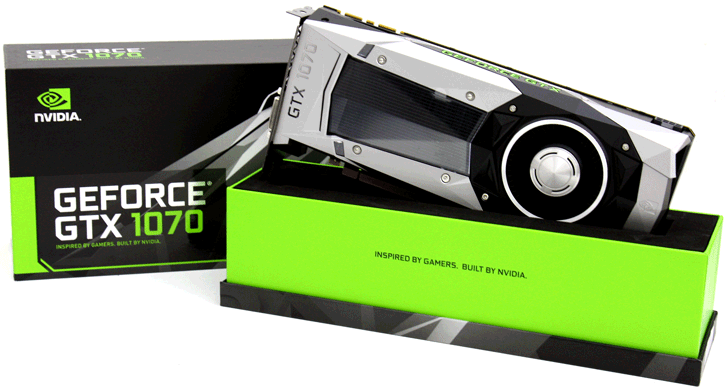
The Nvidia GeForce GTX 1070, released in 2016, significantly impacted the gaming and cryptocurrency mining landscapes. This post will explore its architecture, performance metrics in gaming and mining, overclocking capabilities, power consumption, and market influence, offering a comprehensive overview of its role and significance.
The Nvidia GeForce GTX 1070, released in 2016, significantly impacted the gaming and cryptocurrency mining landscapes. This post will explore its architecture, performance metrics in gaming and mining, overclocking capabilities, power consumption, and market influence, offering a comprehensive overview of its role and significance.
The GTX 1070 is based on Nvidia’s Pascal architecture, which brought substantial improvements in performance and efficiency compared to its predecessors. The Pascal architecture is characterized by its 16nm FinFET manufacturing process. This allowed for a higher transistor density and improved power efficiency. The GTX 1070 features 1920 CUDA cores. These cores are the fundamental building blocks for parallel processing. They enable the GPU to handle complex calculations required for rendering graphics and processing data.
The card comes with 8 GB of GDDR5 memory operating at 8 Gbps. This memory bandwidth is crucial for handling high-resolution textures and complex scenes in modern games. The boost clock speed of 1683 MHz ensures that the GPU can dynamically increase its operating frequency. This provides additional performance when thermal conditions allow. Pascal also introduced improvements in memory compression and pre-emption. These enhancements optimize memory usage and improve overall efficiency.
Gaming Performance
The GTX 1070 was designed to deliver exceptional gaming performance at 1440p resolution. It also provides a smooth experience at 1080p with high refresh rates. At 1440p, the GTX 1070 could handle most AAA titles at high or ultra settings. This delivers frame rates well above 60 fps. Games like “The Witcher 3,” “Grand Theft Auto V,” and “Overwatch” ran exceptionally well. This showcases the card’s ability to handle graphically demanding games.
The card also supports Nvidia’s suite of gaming technologies. This includes GameWorks, which provides developers with tools to enhance visual effects. It also supports GeForce Experience. This offers features like automatic game optimization and driver updates. The GTX 1070’s performance positioned it as a high-end card at the time. It offered a compelling balance of price and performance for gamers seeking a premium experience without the flagship price tag.
Cryptocurrency Mining Capabilities
Beyond gaming, the GTX 1070 became a popular choice for cryptocurrency mining. Its architecture and memory bandwidth made it efficient for mining various cryptocurrencies. Its efficiency made it a favorite among miners. In Ethereum mining, the GTX 1070 could achieve a hash rate of approximately 26 MH/s at stock settings. With overclocking, this could be pushed to around 32 MH/s. This made it a cost-effective option for miners looking to maximize their returns. Explore the different hashrates with the RTX A5000
For Zcash mining, the GTX 1070 delivered a hash rate of 445 sol/s, which could be increased to 475 sol/s with overclocking. Similarly, in Monero mining, the card could achieve 505 H/s, which could be overclocked to 700 H/s. These figures demonstrate the GTX 1070’s versatility in mining different algorithms. It allowed miners to adapt to the most profitable cryptocurrencies at any given time.
The GTX 1070’s mining performance was particularly noteworthy due to its power efficiency. It consumed around 150 watts per hour. This made it more efficient than many of its competitors. This balance of hash rate and power consumption contributed to its popularity during the cryptocurrency boom.
Overclocking and Customization
One of the key advantages of the GTX 1070 was its overclocking potential. Users could significantly boost its performance beyond the factory settings. By adjusting the power limits, core clock, and memory clock, enthusiasts could achieve higher frame rates in games and improved hash rates in mining.
Common overclocking settings for the GTX 1070 included increasing the power limit to 70% for Ethereum mining. This ensured stable performance. For Zcash, a power limit of 80% was often used. For Monero, 65% was typical. The core clock could be increased by +100 MHz. The memory clock could be boosted by +720 MHz. These adjustments could yield substantial performance gains.
However, overclocking also came with risks. Increased power consumption and heat generation could lead to instability or damage if not managed properly. Proper cooling solutions were essential for maintaining stable overclocked performance. The GTX 1070’s overclocking capabilities made it a favorite among enthusiasts. It allowed them to fine-tune their cards to achieve optimal performance for their specific needs.
Market Impact and Legacy
The GTX 1070 was priced in the $400-$500 range upon its release. This positioned it as a high-end card accessible to a wide range of gamers and miners. Its combination of performance, efficiency, and price made it a popular choice. It influenced the market by setting a new standard for performance in its price segment.
The card faced competition from AMD’s RX Vega series. However, the GTX 1070 generally maintained a performance advantage in most games. It also had better power efficiency. This solidified its position as the preferred choice for many consumers. Its success also influenced Nvidia’s subsequent GPU designs. It emphasized the importance of power efficiency and architectural improvements.
Today, the GTX 1070 remains a capable card for 1080p gaming. It can still handle many modern games at medium to high settings. It is also a popular choice in the second-hand market. It offers a budget-friendly option for gamers looking to build a cost-effective gaming PC. Its legacy is marked by its impact on the gaming and mining industries. It showcased the potential of the Pascal architecture.
Power Consumption and Efficiency
The GTX 1070’s power efficiency was a significant factor in its appeal. With a typical power consumption of 150 watts, it struck a balance between performance and energy usage. This was particularly important for miners. They often operated multiple cards simultaneously. Lower power consumption translated to reduced electricity costs and improved profitability.
In gaming, the GTX 1070’s power efficiency allowed for cooler operating temperatures and quieter fan noise. This enhanced the overall gaming experience. Nvidia’s Pascal architecture incorporated several power-saving technologies. These technologies optimized power delivery and reduced wasted energy. The card’s efficient design contributed to its longevity and continued relevance.
Technological Innovations and Contributions
The GTX 1070, based on the Pascal architecture, introduced several technological innovations that have had lasting effects on the GPU industry. One key innovation was the use of 16nm FinFET transistors. This allowed for a significant increase in transistor density. It also improved power efficiency compared to previous generations.
Pascal also introduced improvements in memory compression techniques. These techniques reduced the amount of data that needed to be transferred between the GPU and memory. This improved overall performance. The architecture also featured enhanced support for DirectX 12. This allowed developers to take better advantage of the GPU’s capabilities.
Nvidia’s simultaneous multi-projection (SMP) technology was another notable innovation. It allowed the GPU to render multiple viewpoints of a scene simultaneously. This was particularly useful for virtual reality applications. It reduced the computational overhead. These technological advancements demonstrated Nvidia’s commitment to pushing the boundaries of GPU technology. They set the stage for future generations of graphics cards.
Future Outlook
While the GTX 1070 is now several years old, its impact on the GPU market is undeniable. It set a new standard for performance and efficiency in its price range. It also influenced the design of future graphics cards. As technology continues to advance, it is likely that we will see even more impressive gains in performance and efficiency.
The ongoing development of new architectures and manufacturing processes will pave the way for graphics cards that are even more powerful and energy-efficient. The integration of artificial intelligence (AI) into gaming and other applications will also drive innovation in GPU technology. Nvidia, along with other major players in the industry, will continue to push the boundaries of what is possible. This ensures that the future of graphics cards is bright.
The Nvidia GeForce GTX 1070 was a landmark graphics card that significantly impacted the gaming and cryptocurrency mining industries. Its Pascal architecture, combined with its efficient design and overclocking capabilities, made it a popular choice for gamers and miners alike. Its market impact is still felt today. It serves as a reminder of the rapid pace of innovation in the GPU industry. “`
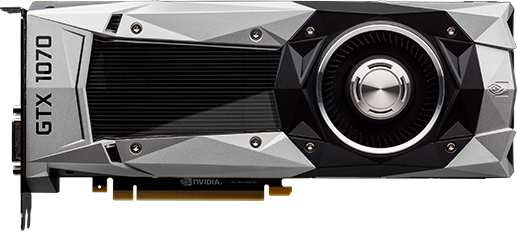
Summary of the Nvidia Geforce GTX 1070 Specifications :
- Architecture : Pascal
- Cores : 1920
- Memory Type-Speed : 8 Gbps
- Boost Clock : 1683 MHz
- Frame Buffer : 8 GB GDDR5
Summary of the Nvidia Geforce GTX 1070 Hashrate :
- Ethereum Mining Hashrate : 26 MH/s
OverClocking Hashrate : 32 MH/s
- Zcash Mining Hashrate : 445 sol/s
OverClocking Hashrate : 475 sol/s
- Monero Mining Hashrate : 505 H/S
OverClocking Hashrate : 700 H/S
- KECCAK Mining Hashrate : 855.84 MH/s
- NIST5 [ Bulwark (BWK) ] Mining Hashrate : 44 MH/s
- NeoScrypt [ (ORB) & (PXC) & (FTC) & (INN) & (GBX) & (TZC) & (VIVO) & (CRC) ] Mining Hashrate : 1.07 MH/s
- Lyra2REv2 [ (XVG) & (VTC) & (MONA) ] Mining Hashrate : 45.27 MH/s
- DaggerHashimoto [ EtHash : (ETH) & (ETC) ] Mining Hashrate : 32.86 MH/s
- Decred (DCR) Mining Hashrate : 3.12 GH/s
- Cryptonight [ (XMR) & (XDN) ] Mining Hashrate : 0.66 kH/s
- CryptoNightV7 Mining Hashrate : 0.66 KH/s
- Lbry ( LBC ) Mining Hashrate : 0.320 GH/s
- Equihash [ (ZEC – ZEN – ZCL) & (BTG) & (KMD) & (HUSH) ] Mining Hashrate : 514.77 Sol/s
- Pascal [ (PASC) & (PASL) ] Mining Hashrate : 1.08 GH/s
- SIACOIN (SC) Mining Hashrate : 1.94 GH/s
- BLAKE2S Mining Hashrate : 4.50 GH/s
GTX 1070 OverClocking Settings :
- Power :
- Ethereum : 70%
- Zcash : 80%
- Monero : 65%
- Core : +100
- Memory : +720
Power Consumption : 150 Watt/Per Hour .
ASUS Dual NVIDIA GeForce RTX 3050 6GB OC Edition Gaming Graphics Card - PCIe 4.0, 6GB GDDR6 Memory, HDMI 2.1, DisplayPort 1.4a, 2-Slot Design, Axial-tech Fan Design, 0dB Technology, Steel Bracket
$239.99 (as of 11/03/2026 13:57 GMT +03:00 - More infoProduct prices and availability are accurate as of the date/time indicated and are subject to change. Any price and availability information displayed on [relevant Amazon Site(s), as applicable] at the time of purchase will apply to the purchase of this product.)
XFX Radeon RX 7900XT Gaming Graphics Card with 20GB GDDR6, AMD RDNA 3 RX-79TMBABF9
$699.99 (as of 11/03/2026 13:57 GMT +03:00 - More infoProduct prices and availability are accurate as of the date/time indicated and are subject to change. Any price and availability information displayed on [relevant Amazon Site(s), as applicable] at the time of purchase will apply to the purchase of this product.)
ASUS Dual Radeon™ RX 9060 XT 16GB GDDR6 Graphics Card (PCIe 5.0, HDMI 2.1b, DisplayPort 2.1a, 2.5-Slot Design, Axial-tech Fan Design, 0dB Technology, and More)
$489.99 (as of 11/03/2026 13:57 GMT +03:00 - More infoProduct prices and availability are accurate as of the date/time indicated and are subject to change. Any price and availability information displayed on [relevant Amazon Site(s), as applicable] at the time of purchase will apply to the purchase of this product.)
ASUS Prime Radeon™ RX 9070 XT OC Edition Graphics Card, AMD (PCIe 5.0, HDMI/DP 2.1, 2.5-Slot Design, Axial-tech Fans, Ball Bearings, Dual BIOS, GPU Guard)
$799.99 (as of 11/03/2026 13:57 GMT +03:00 - More infoProduct prices and availability are accurate as of the date/time indicated and are subject to change. Any price and availability information displayed on [relevant Amazon Site(s), as applicable] at the time of purchase will apply to the purchase of this product.)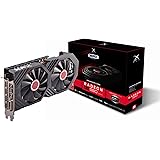
XFX Radeon RX 580 GTS XXX Edition 1386MHz OC+, 8GB GDDR5, VR Ready, Dual BIOS, 3xDP HDMI DVI, AMD Graphics Card (RX-580P8DFD6)
$219.99 (as of 11/03/2026 13:57 GMT +03:00 - More infoProduct prices and availability are accurate as of the date/time indicated and are subject to change. Any price and availability information displayed on [relevant Amazon Site(s), as applicable] at the time of purchase will apply to the purchase of this product.)