
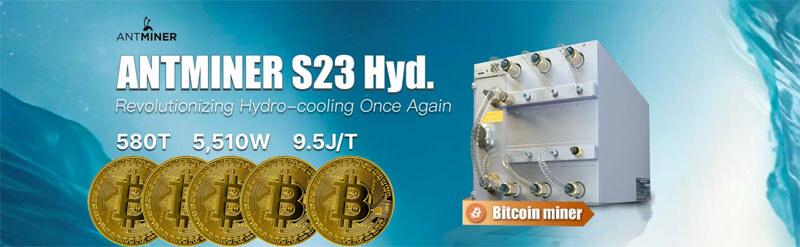
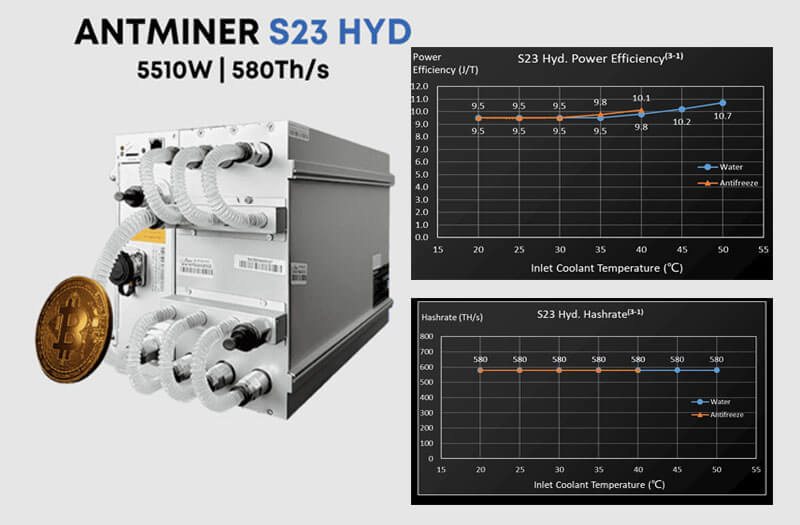
The Bitmain Antminer S23 Hyd belongs to Bitmain’s sophisticated hydro-cooled ASIC series. Hydro miners use liquid cooling to dissipate heat far more efficiently than conventional air-cooled miners, which rely on fans. This design constraint is essential since it enables the silicon chips to operate at greater frequencies safely, therefore boosting computational output without an instant heat failure. Its main features demonstrate its market dominance for 2026: a Hash Rate of 580 TH/s, a Power Consumption of 5,510 Watts, and an efficiency of 9. 5 Joules per Terahash (J/TH). Moreover, the liquid cooling lowers the operational noise level to a tolerable 50 dB, a significant benefit for businesses situated close to populated regions or in settings demanding quieter surroundings.
Appreciating this gear requires first knowing how to mine Bitcoin. By solving challenging cryptographic challenges, mining is the decentralized process that verifies transactions and strengthens the Bitcoin network. Successful miners receive transaction fees and recently created Bitcoin as rewards. In a competitive environment where blocks are solved every ten minutes, hardware efficiency immediately translates into a competitive edge. With an efficiency of 9. 5 J/TH, the S23 Hyd is far ahead of earlier generations, many of which ran at more than 20 J/TH.
Profitability in the 2026 Mining Landscape
The price of Bitcoin, the network difficulty, and the operational cost—mostly electricity—are the three main factors that determine whether Bitcoin mining is profitable. By significantly lowering the cost element connected to performance, the launch of the S23 Hyd seeks to shield miners from fluctuating Bitcoin prices and increasing network difficulty.
Imagine a situation whereby network difficulty has grown drastically by 2026. To reach the same net profitability as the S23 Hyd, which runs at 9. 5 J/TH, an older, less efficient miner that uses, say, 25 J/TH would need a lot more money and power. This difference implies that older models could become unprofitable to run, basically turning into e-waste, even as S23 Hyd operators keep raking in cash. The initial estimate of roughly $17,400 shows the value of this advanced efficiency. Large farms’ total cost of ownership falls over time since their continuous power bills are lower in comparison to their hash output.
Electricity Cost Strategies and Hydro Cooling Benefits
The price of power is the single most important element determining the long-term viability of high-end miners such as the S23 Hyd. Given that the equipment uses 5,510 Watts, lowering the cost per kilowatt-hour is absolutely vital. Good operators in 2026 depend a lot on co-locating mining operations close to abandoned power sources, like far-off hydroelectric dams, flared gas capture facilities, or geothermal plants.
The Impact of Post-Halving Rewards
Following the 2024 halving, the daily release of new Bitcoin has stabilised at around 450 BTC, which comes from the roughly 144 blocks that are mined each day (3. 125 BTC multiplied by 144). This issuance rate will stay the same until the next planned halving, most likely in 2028. The 2024 reduction had an immediate impact on miner resilience. As their income, expressed in Bitcoin, was immediately reduced by half while running expenses, mostly electricity expenses, stayed constant, miners working with older, less energy-efficient gear discovered themselves under enormous pressure.
The viability of mining activities in 2026 will depend less on the block subsidy and more and more on transaction fees. The network has to move to a fee-based security mechanism as the block reward inevitably falls to zero. Robust demand for block space, frequently motivated by rising transaction volume or the use of Layer 2 technologies such as the Lightning Network, which can create fees even if direct on-chain activities decelerate, is needed for this change. Should transaction volume not adequately offset the reduced subsidy, network security may suffer a slow deterioration as less lucrative mining companies shut down, hence lowering the total hash rate.
Advances in Application-Specific Integrated Circuit (ASIC) technology are constantly reshaping the competitive landscape. Think about the Antminer S23 Hyd, which stands for modern mining equipment. With a hash rate of about 580 Terahashes per second (TH/s), this gadget turns raw electrical energy into an astounding volume of computational guesses, corresponding to 580 trillion hash computations per second. The combined power for a mining farm using ten such units reaches 5. 8 Petahashes per second (PH/s), a level close to that of smaller, committed mining pools.
Deploying such powerful gear in 2026 is a complicated equation in terms of profitability. Although the hardware is far more efficient than its forefathers, the network difficulty automatically adjusts to reflect rising total hash power. The time it takes to recover a significant hardware investment, like $17,400 for a high-end machine, could be much longer than the optimistic 12 to 20 months estimated in simpler scenarios if the price of Bitcoin stays flat or goes down. The obstacle to keeping profit gets harder if the price of Bitcoin does not grow to balance off the decreasing subsidy. Miners have to be more efficient, which usually means paying less for electricity than the $0. 08 per kilowatt-hour limit. They often look for rates that are less than $0. 05 per kilowatt-hour.
Transaction costs are predicted to account for a greater portion of the entire revenue pie of the miner by 2026. This change stresses how vital market demand is for Bitcoin utility. Usually, high fee income corresponds with network congestion or considerable on-chain activity, like sizable capital flows or the acceptance of fresh on-chain applications. Reliance just on the block subsidy alone following the 2028 halving will be impractical for miners; long-term viability requires developing business models depending only on fee revenue.
The Economic Sensitivity to Energy Prices
The cost per kilowatt-hour ($/kWh) determines practically all of the economic justification for operating cutting-edge mining equipment. Think about how different power costs strain operations. A miner who obtains electricity at a very competitive rate of $0. 04/kWh will have a reasonable monthly cost for intensive activity. But the cost doubles if that same operation is located where power costs $0. 08/kWh, hence reducing the possible net profit margin by half. Taking this further, a rate of $0. 15/kWh can significantly reduce profitability, therefore pushing even effective equipment like the S23 Hyd into marginal or negative return areas, particularly when cryptocurrency prices are low. This extreme cost sensitivity compels the sector to consider energy procurement as a strategic supply chain matter, necessitating painstaking research of regional energy markets prior to capital investment in equipment.
Strategies for Mitigating Energy Expenditure
Faced with this difficulty, advanced mining companies have devised several fronts to guarantee lower, more consistent energy prices. The most effective strategy is to combine renewable energy sources. Large mining operations are progressively deliberately located close to plentiful, low-cost renewable energy sources, like vast solar and wind farms or significant hydroelectric dams. Directly drawing electricity from these sources not only lowers operating costs but also addresses increasing environmental concerns linked to the energy intensity of proof-of-work mining, hence providing a good public relations advantage in addition to financial benefits.
Temporal changes in electricity costs are exploited by still another often-used method. In many deregulated energy markets, utility costs vary greatly between daytime peak consumption hours and off-peak nighttime or weekend periods. Miners using advanced load-shifting software can arrange most of their calculations to happen during these less expensive, off-peak hours. This can lead to cost savings of 30 to 50 percent compared to running their machines all the time at average electricity prices.
In addition to obtaining less expensive electricity, thermal management improvements provide secondary cost reductions. To greatly increase hardware life and efficiency, advanced facilities are using immersion cooling systems. Crucially, some cutting-edge businesses are converting this waste heat into beneficial applications. For example, the heat produced by the mining rigs can be used to heat buildings, power agricultural greenhouses, or even assist low-grade industrial heating operations. This conversion of an operational liability (waste heat) into an asset radically changes the total energy cost equation for the whole site.
Moreover, operational mobility continues to be a fundamental tactic. Large-scale miners often use strategic relocation, moving entire operations to areas with consistent energy surpluses or very cold temperatures. Naturally reducing the necessity for mechanical cooling, cold ambient temperatures hence lower related energy consumption. Areas high in cheap, otherwise limited hydropower are good examples of long-term locations for capital-intensive mining projects.
At last, operational efficiency permeates the network level. Participating in well-established, extremely optimized mining pools guarantees constant, consistent revenue streams. A solo miner may have to wait months or even years to locate a block, but pool involvement shares rewards in accordance with supplied hash power. This consistency reduces financial uncertainty and enables more accurate forecasting even when energy prices are erratic.
Is the Antminer S23 Hyd Worth It?
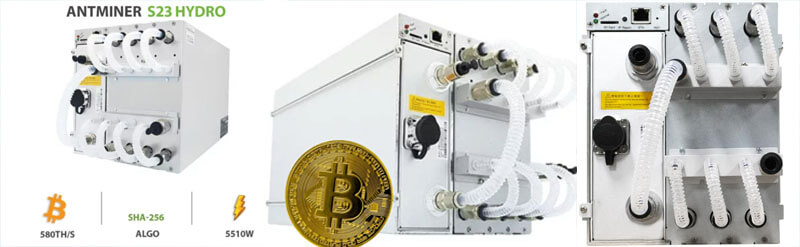
The Antminer S23 Hyd is clearly designed for the top tier of the mining sector. Its characteristics place it among the most powerful Bitcoin mining rigs that will soon be available; hence it is developed mostly for industrial mining operations instead of hobbyists working in a garage. Professional mining farms, institutional crypto miners, and data-centre style mining facilities where amortization timetables and long-term operational stability are essential are among the ideal users. For home mining arrangements, a liquid-cooled system is not practical because of its high initial cost and complicated power and cooling needs. However, for established companies that have obtained access to very affordable electricity and have the required cooling infrastructure, frequently employing closed-loop liquid cooling systems, the S23 Hyd offers remarkable performance metrics that directly translate into improved profitability. For these companies, the machine is a calculated investment meant to quickly increase output and keep a competitive advantage in hash rate contribution.
The technological efficiency of the Antminer S23 Hyd is its main value offer. With 580 TH/s of hash power, this device displays a clear advance in performance. More importantly, it boasts class-leading energy efficiency, with a reported consumption of around 9. 5 Joules per Terahash (J/TH). In the framework of contemporary Bitcoin mining, the one most important factor for long-term survival is efficiency. Only those miners who reduce the energy used per successful block reward may keep their margins positive as network complexity rises. The Hyd model’s core liquid cooling technology enables the ASIC chips to run closer to their ideal performance limits regularly, therefore lowering thermal throttling and sustaining that maximum efficiency for extended periods under high load. Particularly when power prices are not insignificant, this engineering emphasis on thermodynamics and power consumption lifts the S23 Hyd above less effective air-cooled rivals.
Machines such as the Antminer S23 Hyd highlight the continuous industrialization of cryptocurrency mining. ASIC miners are always developing towards devices that provide greater hash rates, lower per-operation energy consumption, and more sophisticated cooling systems to control unavoidable heat generation. This relentless drive for efficiency is essential given the global competitiveness. Deciding whether the S23 Hyd is worth the investment calls for considering the predicted pace of difficulty rises in addition to present profitability estimates. Miners who use modern gear now are basically protecting themselves from having old equipment in the future. Three elements, better hardware, guaranteed low power costs, and wise operational deployment including using renewable energy sources or taking advantage of off-peak electricity price contracts, will define success in this fiercely competitive market. The selection of smart pools is also essential for maximizing the realization of income from the enormous processing capability provided by this hardware.
https://youtu.be/9GKetgiWQ7A?si=sdj9uBrj3d1nxJZY
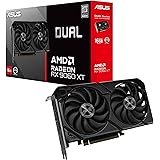
ASUS Dual Radeon™ RX 9060 XT 16GB GDDR6 Graphics Card (PCIe 5.0, HDMI 2.1b, DisplayPort 2.1a, 2.5-Slot Design, Axial-tech Fan Design, 0dB Technology, and More)
$489.99 (as of 11/03/2026 13:57 GMT +03:00 - More infoProduct prices and availability are accurate as of the date/time indicated and are subject to change. Any price and availability information displayed on [relevant Amazon Site(s), as applicable] at the time of purchase will apply to the purchase of this product.)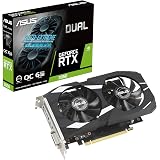
ASUS Dual NVIDIA GeForce RTX 3050 6GB OC Edition Gaming Graphics Card - PCIe 4.0, 6GB GDDR6 Memory, HDMI 2.1, DisplayPort 1.4a, 2-Slot Design, Axial-tech Fan Design, 0dB Technology, Steel Bracket
$239.99 (as of 11/03/2026 13:57 GMT +03:00 - More infoProduct prices and availability are accurate as of the date/time indicated and are subject to change. Any price and availability information displayed on [relevant Amazon Site(s), as applicable] at the time of purchase will apply to the purchase of this product.)
msi RTX 5070 12G Gaming Trio OC Graphics Card (12GB GDDR7, 192-bit, Extreme Performance: 2625 MHz, DisplayPort x3 2.1a, HDMI 2.1b, NVIDIA Blackwell Architecture)
$679.99 (as of 11/03/2026 13:57 GMT +03:00 - More infoProduct prices and availability are accurate as of the date/time indicated and are subject to change. Any price and availability information displayed on [relevant Amazon Site(s), as applicable] at the time of purchase will apply to the purchase of this product.)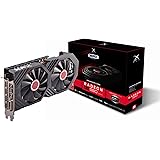
XFX Radeon RX 580 GTS XXX Edition 1386MHz OC+, 8GB GDDR5, VR Ready, Dual BIOS, 3xDP HDMI DVI, AMD Graphics Card (RX-580P8DFD6)
$219.99 (as of 11/03/2026 13:57 GMT +03:00 - More infoProduct prices and availability are accurate as of the date/time indicated and are subject to change. Any price and availability information displayed on [relevant Amazon Site(s), as applicable] at the time of purchase will apply to the purchase of this product.)
ASUS Prime Radeon™ RX 9070 XT OC Edition Graphics Card, AMD (PCIe 5.0, HDMI/DP 2.1, 2.5-Slot Design, Axial-tech Fans, Ball Bearings, Dual BIOS, GPU Guard)
$799.99 (as of 11/03/2026 13:57 GMT +03:00 - More infoProduct prices and availability are accurate as of the date/time indicated and are subject to change. Any price and availability information displayed on [relevant Amazon Site(s), as applicable] at the time of purchase will apply to the purchase of this product.)